AI Engineering / Multi-Agent Systems
The Orchestrator’s Advantage: Mastering Multi-Agent Workflows with Claude Code
Stop prompting and start managing. Learn why a hierarchical multi-agent architecture with Claude is the secret to scaling AI automation in mission-critical systems.
Written by
Codehouse Author
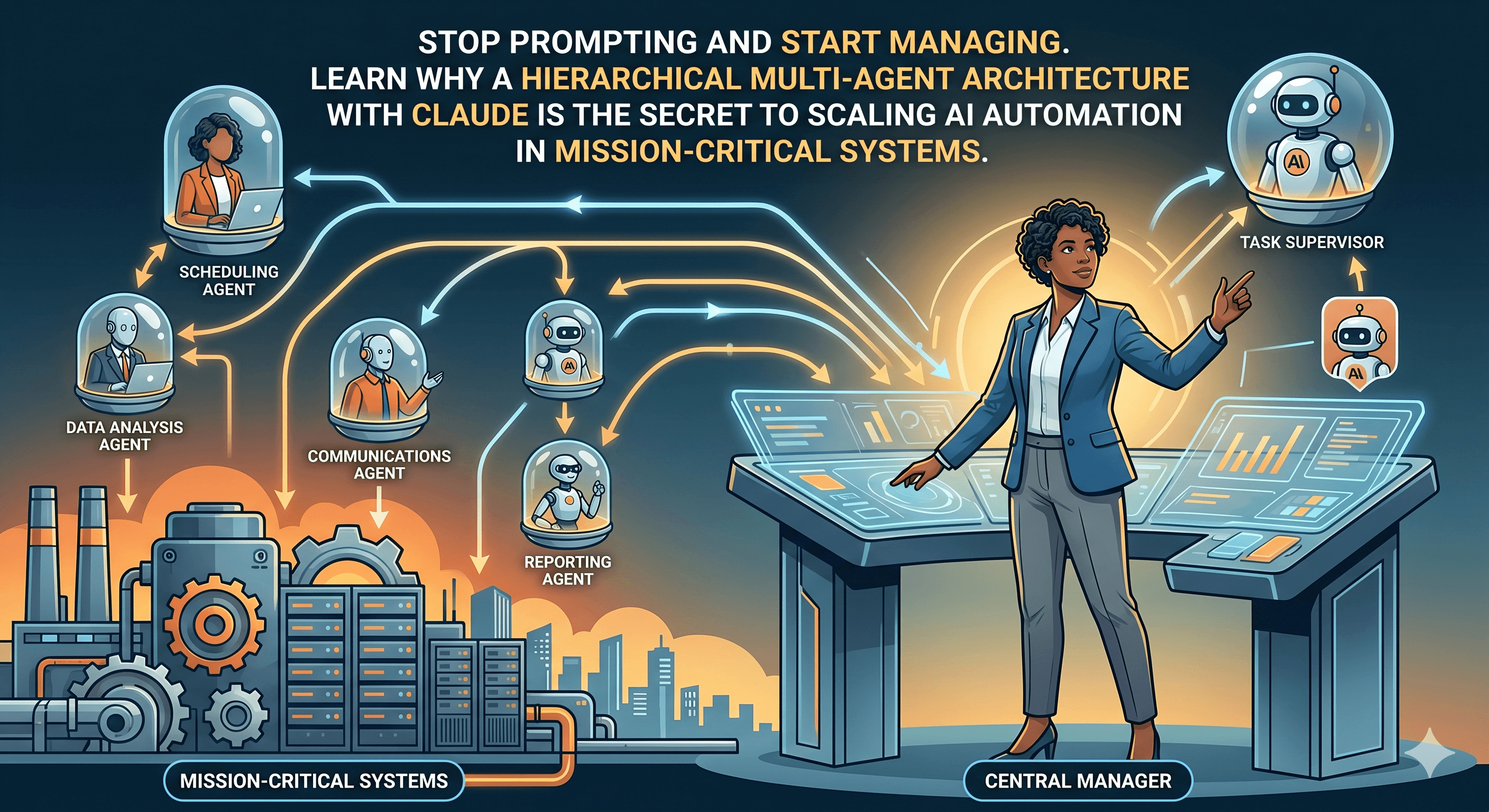
In early 2025, "AI Engineering" was often reduced to finding the perfect prompt for a single LLM. By 2026, that approach has hit a hard ceiling. As codebases grow and architectural complexity increases, the "one brain" model fails due to context saturation and reasoning drift. The solution that top-tier architects are now employing is Claude Multi-Agent Orchestration—a hierarchical system where a primary model acts as a Lead Architect, delegating surgical tasks to specialized sub-agents.
At Codehouse, we’ve integrated Claude Code into our core development lifecycle, moving beyond simple chat interfaces. By leveraging Claude Multi-Agent Orchestration, we can treat AI as a scalable engineering department rather than a solo freelancer. This isn't just about speed; it's about maintaining architectural integrity in systems that are too large for any single model to hold in its working memory.
1) The Context Noise Problem
Even with the massive context windows available in 2026, "Context Noise" remains the primary enemy of AI accuracy. When you feed an entire 100,000-line repository into a single model, the signal-to-noise ratio drops. The model might understand the syntax, but it loses the "why" behind the project's AI Code Handover protocols or its specific security constraints. This is where Claude Multi-Agent Orchestration becomes essential.
Instead of one model trying to "know everything," we use an Orchestrator-Worker pattern. The Orchestrator is responsible for high-level strategy: it reads the project rules, maps dependencies, and identifies the scope of change. It then spins up "Disposable Sub-Agents" for specific, narrow missions. This separation ensures that each sub-agent operates with "Clean Context"—only the specific files and instructions it needs to succeed.
2) Why Claude Code for Orchestration?
While there are many models available, Claude Code has emerged as the preferred engine for Claude Multi-Agent Orchestration due to its superior reasoning capabilities and its native "Artifact" management. In a multi-agent setup, the "Hand-Off" between agents is the most common point of failure. Claude’s ability to generate structured, self-documenting code blocks allows the Orchestrator to pass precise "Technical Directives" to workers without losing architectural nuance.
This workflow mirrors the senior mindset we cultivate in our Linux Mastery: Full Course: break complex problems into small, piped utilities that do one thing well. In our orchestration layer, a "Research Agent" might use standard Linux tools to grep for legacy patterns, while a "Coding Agent" performs the refactor, and a "Validation Agent" runs the tests—all coordinated by a single Claude Lead.
3) Designing the Hand-Off Protocol
To implement Claude Multi-Agent Orchestration effectively, you must establish a formal protocol for how agents communicate. At Codehouse, we follow the "Rule of 4" for agentic hand-offs:
Mission-Based Scoping: Every sub-agent is given a "Mission" with a clear definition of success and failure, preventing the agent from wandering outside its assigned module.
Adversarial Verification: The Orchestrator doesn't trust the sub-agent’s output. It employs a separate "Validator Agent" to find edge cases the "Worker Agent" might have missed, similar to our Multi-Agent Systems strategy.
Context Compression: We use the Anthropic Model Context Protocol (MCP) to selectively expose only the necessary database schemas or API definitions, keeping the "Context Tax" low.
Stateful History: The Orchestrator maintains a "Strategic Log" of all sub-agent actions, allowing for easy rollbacks and a clear audit trail if an agent makes a non-idiomatic change.
4) Scaling to Enterprise Modernization
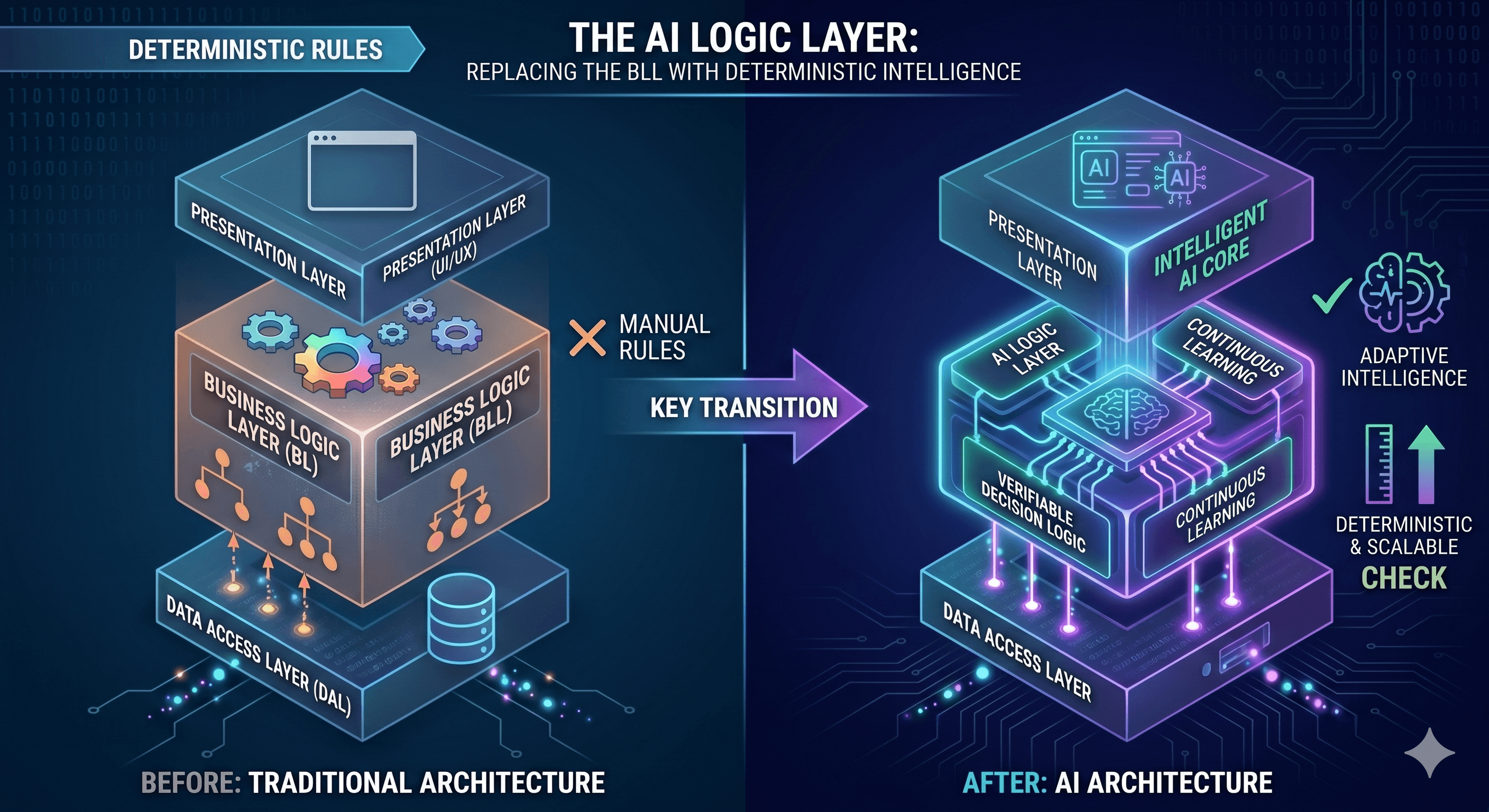
The true power of Claude Multi-Agent Orchestration is seen in high-stakes tasks like modernizing legacy .NET 4.8 applications to .NET 8. By orchestrating a fleet of specialized agents, we can modernize entire modules in parallel—one agent handling the Data Access Layer (DALC), another the Business Logic (BLC), and a third updating the API endpoints—while the Lead Architect ensures that the overall system topology remains intact.
As a senior engineer, your value is no longer measured by your typing speed. It is measured by your ability to architect these agentic systems. You are the director of a digital symphony. By mastering Claude Multi-Agent Orchestration, you aren't just writing code faster; you are building a resilient, autonomous engineering engine that scales with your ambition.
For more on building the infrastructure that powers these agents, explore our deep dive into Linux AI Engineering.
In early 2025, "AI Engineering" was often reduced to finding the perfect prompt for a single LLM. By 2026, that approach has hit a hard ceiling. As codebases grow and architectural complexity increases, the "one brain" model fails due to context saturation and reasoning drift. The solution that top-tier architects are now employing is Claude Multi-Agent Orchestration—a hierarchical system where a primary model acts as a Lead Architect, delegating surgical tasks to specialized sub-agents.
At Codehouse, we’ve integrated Claude Code into our core development lifecycle, moving beyond simple chat interfaces. By leveraging Claude Multi-Agent Orchestration, we can treat AI as a scalable engineering department rather than a solo freelancer. This isn't just about speed; it's about maintaining architectural integrity in systems that are too large for any single model to hold in its working memory.
1) The Context Noise Problem
Even with the massive context windows available in 2026, "Context Noise" remains the primary enemy of AI accuracy. When you feed an entire 100,000-line repository into a single model, the signal-to-noise ratio drops. The model might understand the syntax, but it loses the "why" behind the project's AI Code Handover protocols or its specific security constraints. This is where Claude Multi-Agent Orchestration becomes essential.
Instead of one model trying to "know everything," we use an Orchestrator-Worker pattern. The Orchestrator is responsible for high-level strategy: it reads the project rules, maps dependencies, and identifies the scope of change. It then spins up "Disposable Sub-Agents" for specific, narrow missions. This separation ensures that each sub-agent operates with "Clean Context"—only the specific files and instructions it needs to succeed.
2) Why Claude Code for Orchestration?
While there are many models available, Claude Code has emerged as the preferred engine for Claude Multi-Agent Orchestration due to its superior reasoning capabilities and its native "Artifact" management. In a multi-agent setup, the "Hand-Off" between agents is the most common point of failure. Claude’s ability to generate structured, self-documenting code blocks allows the Orchestrator to pass precise "Technical Directives" to workers without losing architectural nuance.
This workflow mirrors the senior mindset we cultivate in our Linux Mastery: Full Course: break complex problems into small, piped utilities that do one thing well. In our orchestration layer, a "Research Agent" might use standard Linux tools to grep for legacy patterns, while a "Coding Agent" performs the refactor, and a "Validation Agent" runs the tests—all coordinated by a single Claude Lead.
3) Designing the Hand-Off Protocol
To implement Claude Multi-Agent Orchestration effectively, you must establish a formal protocol for how agents communicate. At Codehouse, we follow the "Rule of 4" for agentic hand-offs:
Mission-Based Scoping: Every sub-agent is given a "Mission" with a clear definition of success and failure, preventing the agent from wandering outside its assigned module.
Adversarial Verification: The Orchestrator doesn't trust the sub-agent’s output. It employs a separate "Validator Agent" to find edge cases the "Worker Agent" might have missed, similar to our Multi-Agent Systems strategy.
Context Compression: We use the Anthropic Model Context Protocol (MCP) to selectively expose only the necessary database schemas or API definitions, keeping the "Context Tax" low.
Stateful History: The Orchestrator maintains a "Strategic Log" of all sub-agent actions, allowing for easy rollbacks and a clear audit trail if an agent makes a non-idiomatic change.
4) Scaling to Enterprise Modernization
The true power of Claude Multi-Agent Orchestration is seen in high-stakes tasks like modernizing legacy .NET 4.8 applications to .NET 8. By orchestrating a fleet of specialized agents, we can modernize entire modules in parallel—one agent handling the Data Access Layer (DALC), another the Business Logic (BLC), and a third updating the API endpoints—while the Lead Architect ensures that the overall system topology remains intact.
As a senior engineer, your value is no longer measured by your typing speed. It is measured by your ability to architect these agentic systems. You are the director of a digital symphony. By mastering Claude Multi-Agent Orchestration, you aren't just writing code faster; you are building a resilient, autonomous engineering engine that scales with your ambition.
For more on building the infrastructure that powers these agents, explore our deep dive into Linux AI Engineering.