Engineering / Foundations
The End of the Black Box: Why Foundational Knowledge is Your Only Survival Gear
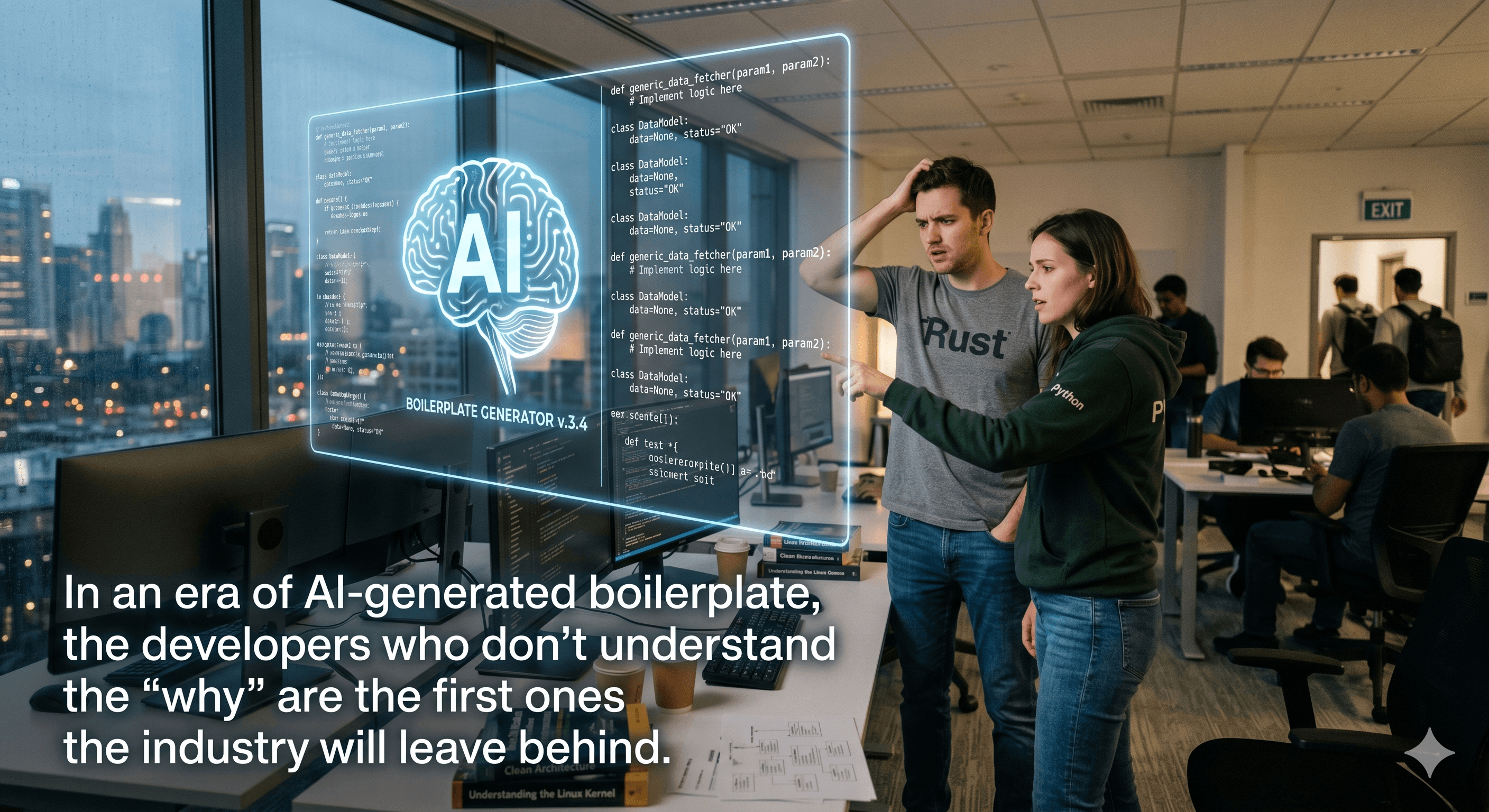
In an era of AI-generated boilerplate, the developers who don't understand the "why" are the first ones the industry will leave behind.
Written by

Codehouse Author
The 3 AM Production Ghost
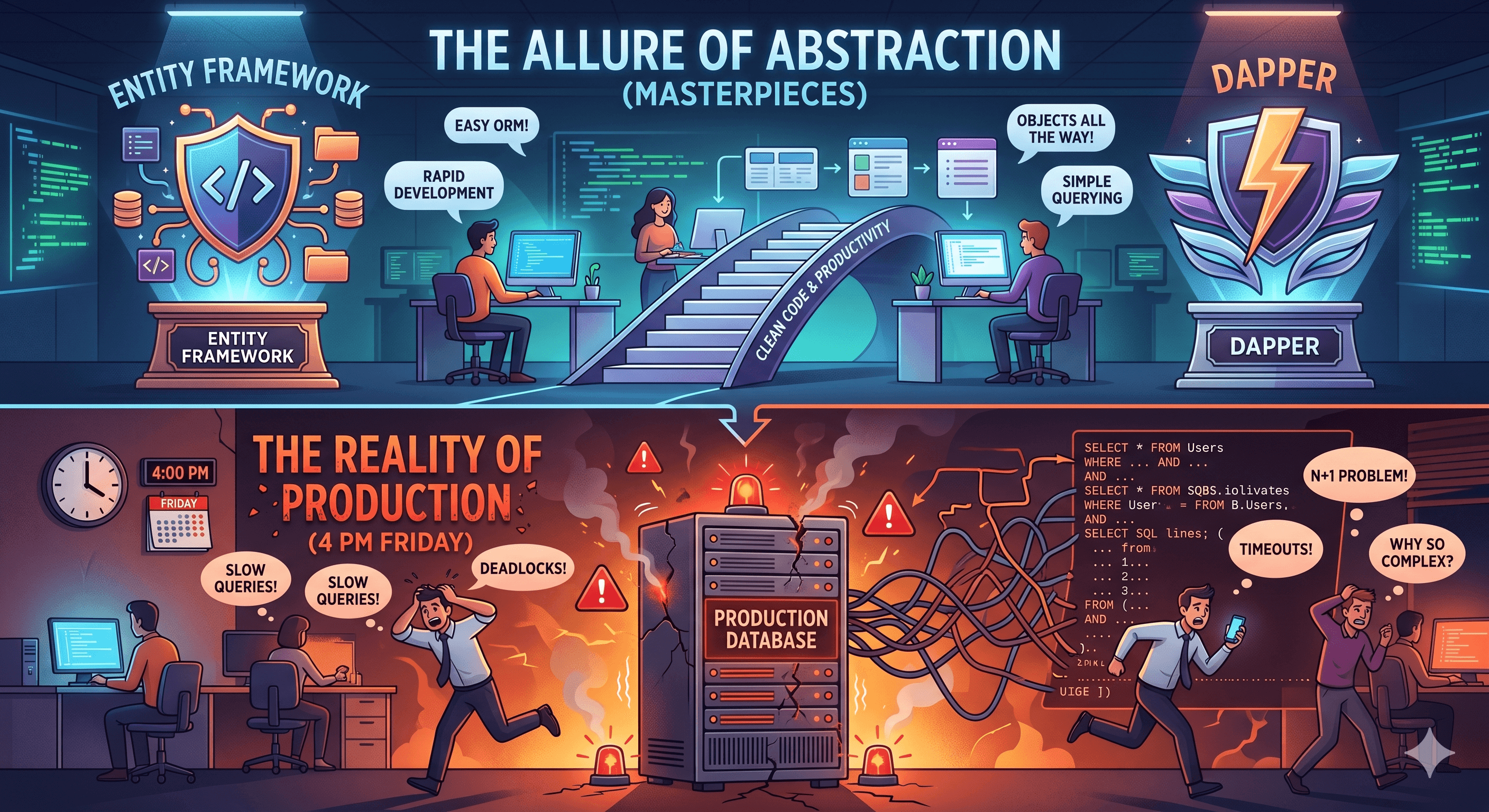
It’s 3:00 AM. Your high-traffic API is crawling. The CPU on your database server is pinned at 100%, and your AI assistant suggests "restarting the service" or "scaling up the instance." You follow the advice, the service restarts, and ten minutes later, the CPU is back at 100%. You are staring at a black box. This is the moment where syntax doesn't matter, and your ability to prompt an LLM reaches its limit. This is where "foundational knowledge in software engineering" becomes the difference between a recovery and a catastrophe.
The "ghost" in this scenario isn't a bug in your code; it's a lack of understanding of how your database handles concurrent transactions or how the underlying Linux OS manages process priority. If you don't know how the engine works, you're just a passenger, and in today's market, passengers are becoming redundant.
The Illusion of Productivity
We are living in an era of unprecedented abstraction. We have frameworks that spin up entire backends with one command and AI that writes the "boring" CRUD logic for us. On the surface, productivity has never been higher. However, this ease of entry has created a generation of "hollow engineers"—developers who can assemble a puzzle but don't understand the chemistry of the pieces.
When you rely solely on high-level tools without mastering the roots, you build a "Mental Model" that is fragile. You understand the *how* (syntax) but ignore the *why* (architecture). The industry is moving toward a state where basic coding is a commodity. If your only value is translating a requirement into a Javascript function, you are competing with a machine that does it faster and cheaper. To stay in the race, you must transcend the black box.
The "No Excuse" Era
There is no longer any excuse for a senior developer to say, "I don't know how the server handles this" or "I don't understand how SQL executes this query." Information is everywhere, and the tools to experiment are free. To survive this era, you must have a "Senior Mindset" that demands operational reality. This means understanding:
The OS Layer: Your code doesn't run in a vacuum. It runs on a kernel. Understanding Linux Mastery is no longer "for DevOps guys"—it's for anyone who wants to write performant software.
Data Internals: A database is not just a JSON store. It’s a complex system of B-Trees, locks, and execution plans. Mastering MS SQL Database Programming allows you to stop guessing and start engineering.
Network Realities: Latency, throughput, and the cost of a TCP handshake are the invisible walls your "fast" code hits in production.
Why the "Easy Path" Leads to the Exit
The developers who will "quit the rate" (or be forced out) are those who refuse to look under the hood. The market is correcting itself. As highlighted in the Stack Overflow Developer Survey 2024, while AI tools are widely adopted, the demand for deep technical expertise in systems and performance remains the highest-paid sector of our craft.
Companies aren't looking for more "coders"; they are looking for "problem solvers" who can navigate a system when the AI-generated code fails. If you cannot explain why a specific architectural choice was made, or if you can't debug a memory leak in a Node.js worker thread, you are a liability in a production environment.
Closing the Gap
Reclaiming your career starts with curiosity. Next time you use a library, read its source code. Next time a query is slow, look at the execution plan. Stop treating your environment as a black box. The "hard way" is actually the only shortcut that exists in software engineering. By investing in foundational roots today, you ensure that you aren't just writing code for the present, but building a career that can withstand the future.
The choice is simple: Understand how it works, or become obsolete. There is no middle ground left.
The 3 AM Production Ghost
It’s 3:00 AM. Your high-traffic API is crawling. The CPU on your database server is pinned at 100%, and your AI assistant suggests "restarting the service" or "scaling up the instance." You follow the advice, the service restarts, and ten minutes later, the CPU is back at 100%. You are staring at a black box. This is the moment where syntax doesn't matter, and your ability to prompt an LLM reaches its limit. This is where "foundational knowledge in software engineering" becomes the difference between a recovery and a catastrophe.
The "ghost" in this scenario isn't a bug in your code; it's a lack of understanding of how your database handles concurrent transactions or how the underlying Linux OS manages process priority. If you don't know how the engine works, you're just a passenger, and in today's market, passengers are becoming redundant.
The Illusion of Productivity
We are living in an era of unprecedented abstraction. We have frameworks that spin up entire backends with one command and AI that writes the "boring" CRUD logic for us. On the surface, productivity has never been higher. However, this ease of entry has created a generation of "hollow engineers"—developers who can assemble a puzzle but don't understand the chemistry of the pieces.
When you rely solely on high-level tools without mastering the roots, you build a "Mental Model" that is fragile. You understand the *how* (syntax) but ignore the *why* (architecture). The industry is moving toward a state where basic coding is a commodity. If your only value is translating a requirement into a Javascript function, you are competing with a machine that does it faster and cheaper. To stay in the race, you must transcend the black box.
The "No Excuse" Era
There is no longer any excuse for a senior developer to say, "I don't know how the server handles this" or "I don't understand how SQL executes this query." Information is everywhere, and the tools to experiment are free. To survive this era, you must have a "Senior Mindset" that demands operational reality. This means understanding:
The OS Layer: Your code doesn't run in a vacuum. It runs on a kernel. Understanding Linux Mastery is no longer "for DevOps guys"—it's for anyone who wants to write performant software.
Data Internals: A database is not just a JSON store. It’s a complex system of B-Trees, locks, and execution plans. Mastering MS SQL Database Programming allows you to stop guessing and start engineering.
Network Realities: Latency, throughput, and the cost of a TCP handshake are the invisible walls your "fast" code hits in production.
Why the "Easy Path" Leads to the Exit
The developers who will "quit the rate" (or be forced out) are those who refuse to look under the hood. The market is correcting itself. As highlighted in the Stack Overflow Developer Survey 2024, while AI tools are widely adopted, the demand for deep technical expertise in systems and performance remains the highest-paid sector of our craft.
Companies aren't looking for more "coders"; they are looking for "problem solvers" who can navigate a system when the AI-generated code fails. If you cannot explain why a specific architectural choice was made, or if you can't debug a memory leak in a Node.js worker thread, you are a liability in a production environment.
Closing the Gap
Reclaiming your career starts with curiosity. Next time you use a library, read its source code. Next time a query is slow, look at the execution plan. Stop treating your environment as a black box. The "hard way" is actually the only shortcut that exists in software engineering. By investing in foundational roots today, you ensure that you aren't just writing code for the present, but building a career that can withstand the future.
The choice is simple: Understand how it works, or become obsolete. There is no middle ground left.