AI Engineering / Architecture
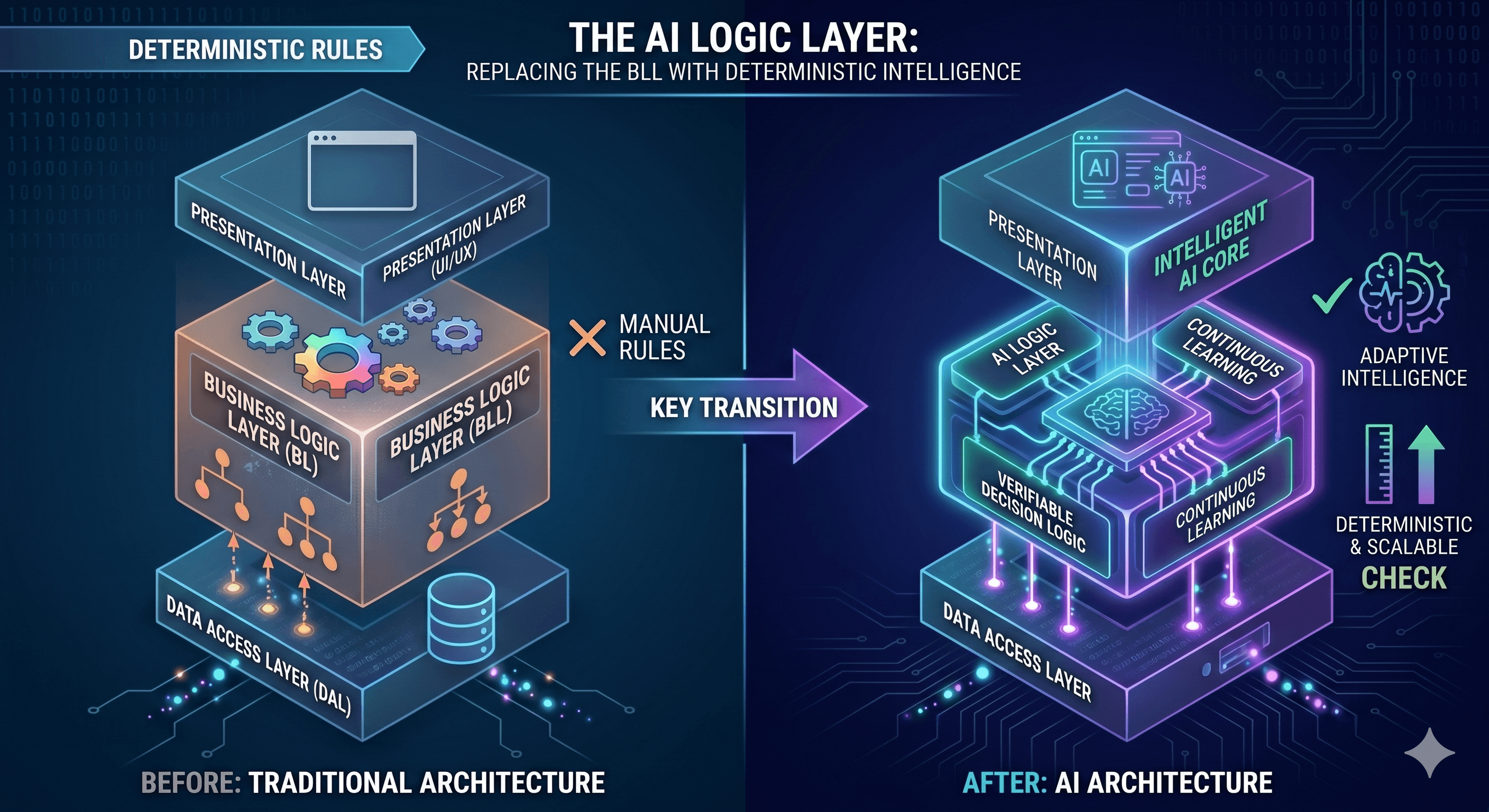
The AI Logic Layer: Replacing the BLL with Deterministic Intelligence
Beyond Prompts: Architecting a Production-Ready AI Logic Layer with Foundational Roots.
Written by

Rony Rizk
The AI Logic Layer: Replacing the BLL with Deterministic Intelligence
It’s 3 AM on a Tuesday, and your production environment is hemorrhaging revenue. The "Customs Compliance Engine"—a module that was supposed to be the crown jewel of your new AI Logic Layer—has decided that all exports to the EU are suddenly high-risk. There were no code changes, no deployment, and no database migrations. The AI just "changed its mind." As you dig through the logs, you realize the model received a slightly different prompt format and hallucinated a new legal constraint. This is the Hollow Experience of modern engineering: you have the power of a "God-like" API at your fingertips, but without Foundational Roots, you are just a passenger on a ship with no rudder.
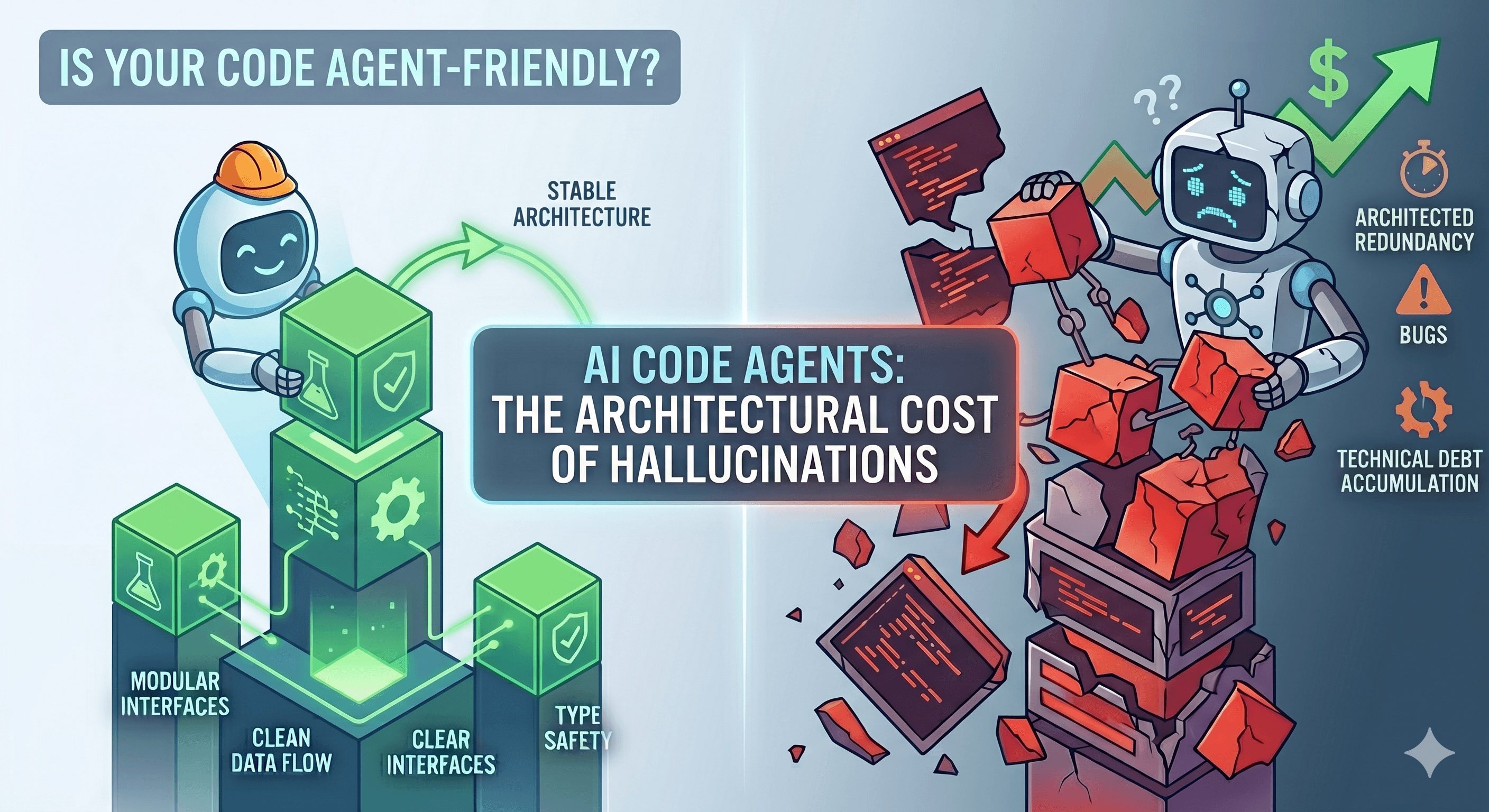
The transition to an AI Logic Layer represents a fundamental shift from writing explicit instructions to defining probabilistic intent. While the promise of replacing 10,000 lines of nested C# conditionals with a single API call is seductive, it often creates a "Black Box" that fails exactly when you need it most. To survive this shift, you need a Senior Mindset that treats AI as a component to be governed, not a magic wand. This starts with making sure your system is Agent-Friendly from the ground up.
1. The Determinism Challenge: Taming the Stochastic Beast
In a traditional BLC (Business Logic Layer), `CalculateTax(100)` is a mathematical certainty. In an AI Logic Layer, it’s a conversation. To move from "Maybe" to "Must" in production, you must implement a strict Mental Model for determinism:
Zero-Temperature Governance: While setting `temperature` to 0 and using `seed` values is the entry-level requirement, a Production-Ready system goes further. You need to sort and canonicalize every input to ensure the model’s reasoning path remains as static as possible.
Structured Outputs as a Contract: Never allow an AI Logic Layer to return raw text. By enforcing JSON Schema or Zod/Pydantic validation, you turn a probabilistic guess into a typed contract. If the AI deviates by a single field, your system should trigger an immediate circuit breaker.
Input Anchoring: Providing clear, immutable examples (Few-Shot Prompting) within the AI Logic Layer acts as a physical anchor for the model’s reasoning, preventing it from drifting into creative (and dangerous) territory.
2. The Model Maze: Performance vs. Precision
One of the greatest Shadow AI risks is assuming that the "Smartest" model is the best for your logic. A Frontier Model like Claude 3.5 might be great for reasoning, but it’s overkill for a classification task that an Small Language Model (SLM) could handle in 1/10th of the time. The danger lies in "Model Drift." When an API provider silently updates their weights, your AI Logic Layer might suddenly interpret a "High Risk" flag as "Medium," silently breaking your business rules. This is why Shadow AI: The Invisible Risk is the silent killer of modern startups.
3. The Hidden Costs: The "Operational Tax"
The AI Logic Layer isn't just about token prices; it’s about architectural overhead. A hardcoded C# module executes in less than a millisecond with zero external dependencies. An AI call adds 500ms of latency, requires retry logic, and creates a hard dependency on a third-party vendor. If OpenAI goes down, does your checkout page die? A Senior Developer builds for the failure, not the success. This means implementing asynchronous patterns, robust caching, and fallback "Heuristic Logic" that can take over when the AI Logic Layer is unavailable.
4. Responsibility and Ownership: Who Owns the Hallucination?
The most dangerous trend in 2026 is the Vanishing Human Touch. When logic is hardcoded, ownership is clear. When logic is "prompted," ownership becomes fuzzy. To maintain Production-Ready standards, every AI-driven rule must be wrapped in a "Safety Sandbox." The AI provides the "Intelligence," but your traditional BLC provides the "Governance." If the AI suggests a tax calculation that is mathematically impossible based on your hardcoded guardrails, the system must reject it. You are the orchestrator; the AI is the specialist.
Conclusion: The Why Behind the Logic
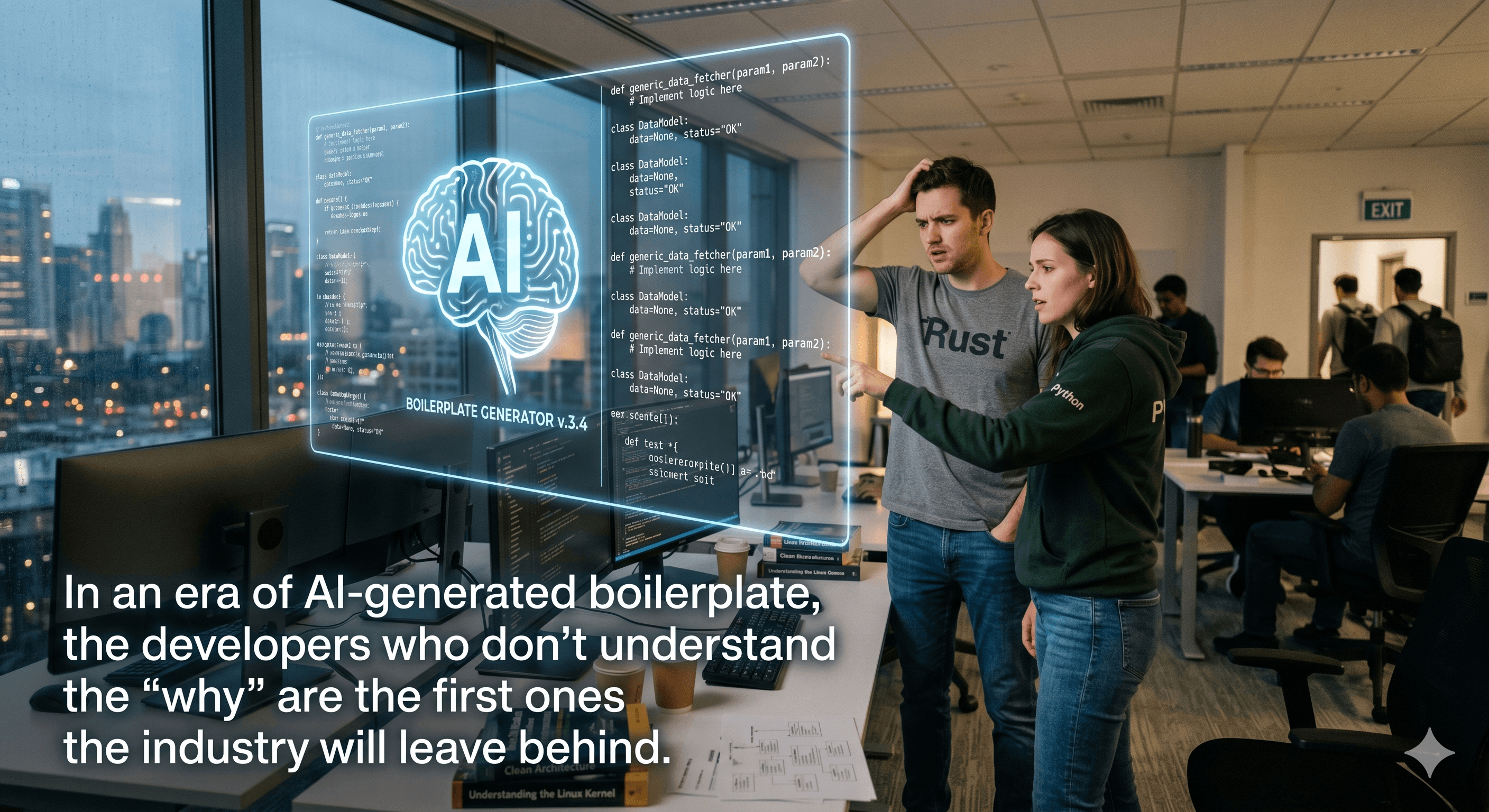
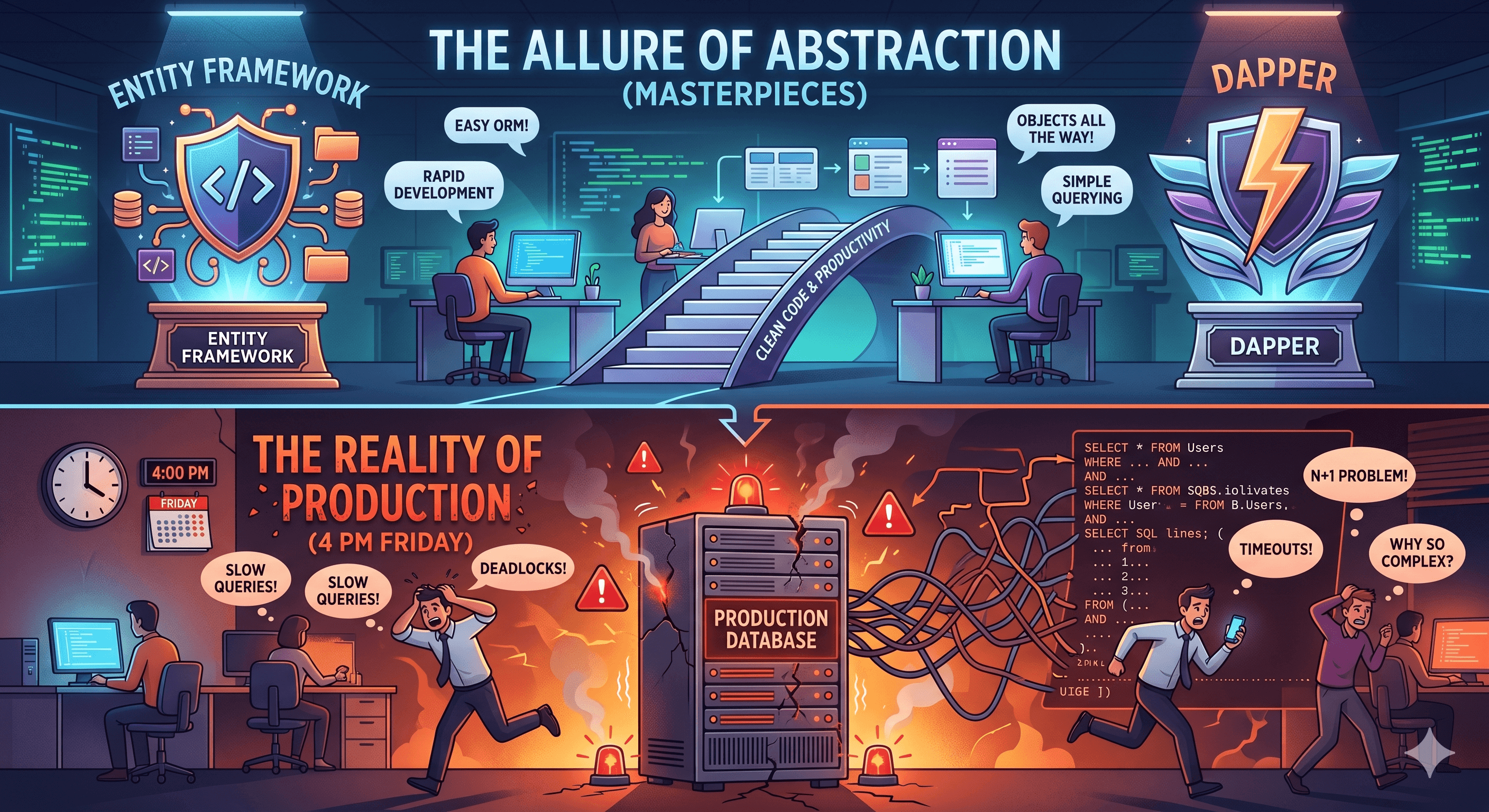
The AI Logic Layer is an incredible tool, but it is not a shortcut. You cannot manage an AI-driven system if you don't understand the Foundational Roots of how a computer actually works. When the AI produces a slow query, you need to understand SQL Performance to fix it. When the API call hangs, you need to understand Linux networking to diagnose it. The "Easy" path is a trap; the "Senior" path is built on knowledge.
Are you ready to stop "guessing" with AI and start "engineering" with it? The secret to success in the next decade isn't learning more prompts; it’s mastering the foundations that make prompts work. Explore our Production APIs and Platform Skills course to learn how to build resilient, governed systems that leverage the AI Logic Layer without falling victim to its risks. For those looking to dive deeper into OpenAI's reproducibility features, check out their reproducible outputs guide.
The AI Logic Layer: Replacing the BLL with Deterministic Intelligence
It’s 3 AM on a Tuesday, and your production environment is hemorrhaging revenue. The "Customs Compliance Engine"—a module that was supposed to be the crown jewel of your new AI Logic Layer—has decided that all exports to the EU are suddenly high-risk. There were no code changes, no deployment, and no database migrations. The AI just "changed its mind." As you dig through the logs, you realize the model received a slightly different prompt format and hallucinated a new legal constraint. This is the Hollow Experience of modern engineering: you have the power of a "God-like" API at your fingertips, but without Foundational Roots, you are just a passenger on a ship with no rudder.
The transition to an AI Logic Layer represents a fundamental shift from writing explicit instructions to defining probabilistic intent. While the promise of replacing 10,000 lines of nested C# conditionals with a single API call is seductive, it often creates a "Black Box" that fails exactly when you need it most. To survive this shift, you need a Senior Mindset that treats AI as a component to be governed, not a magic wand. This starts with making sure your system is Agent-Friendly from the ground up.
1. The Determinism Challenge: Taming the Stochastic Beast
In a traditional BLC (Business Logic Layer), `CalculateTax(100)` is a mathematical certainty. In an AI Logic Layer, it’s a conversation. To move from "Maybe" to "Must" in production, you must implement a strict Mental Model for determinism:
Zero-Temperature Governance: While setting `temperature` to 0 and using `seed` values is the entry-level requirement, a Production-Ready system goes further. You need to sort and canonicalize every input to ensure the model’s reasoning path remains as static as possible.
Structured Outputs as a Contract: Never allow an AI Logic Layer to return raw text. By enforcing JSON Schema or Zod/Pydantic validation, you turn a probabilistic guess into a typed contract. If the AI deviates by a single field, your system should trigger an immediate circuit breaker.
Input Anchoring: Providing clear, immutable examples (Few-Shot Prompting) within the AI Logic Layer acts as a physical anchor for the model’s reasoning, preventing it from drifting into creative (and dangerous) territory.
2. The Model Maze: Performance vs. Precision
One of the greatest Shadow AI risks is assuming that the "Smartest" model is the best for your logic. A Frontier Model like Claude 3.5 might be great for reasoning, but it’s overkill for a classification task that an Small Language Model (SLM) could handle in 1/10th of the time. The danger lies in "Model Drift." When an API provider silently updates their weights, your AI Logic Layer might suddenly interpret a "High Risk" flag as "Medium," silently breaking your business rules. This is why Shadow AI: The Invisible Risk is the silent killer of modern startups.
3. The Hidden Costs: The "Operational Tax"
The AI Logic Layer isn't just about token prices; it’s about architectural overhead. A hardcoded C# module executes in less than a millisecond with zero external dependencies. An AI call adds 500ms of latency, requires retry logic, and creates a hard dependency on a third-party vendor. If OpenAI goes down, does your checkout page die? A Senior Developer builds for the failure, not the success. This means implementing asynchronous patterns, robust caching, and fallback "Heuristic Logic" that can take over when the AI Logic Layer is unavailable.
4. Responsibility and Ownership: Who Owns the Hallucination?
The most dangerous trend in 2026 is the Vanishing Human Touch. When logic is hardcoded, ownership is clear. When logic is "prompted," ownership becomes fuzzy. To maintain Production-Ready standards, every AI-driven rule must be wrapped in a "Safety Sandbox." The AI provides the "Intelligence," but your traditional BLC provides the "Governance." If the AI suggests a tax calculation that is mathematically impossible based on your hardcoded guardrails, the system must reject it. You are the orchestrator; the AI is the specialist.
Conclusion: The Why Behind the Logic
The AI Logic Layer is an incredible tool, but it is not a shortcut. You cannot manage an AI-driven system if you don't understand the Foundational Roots of how a computer actually works. When the AI produces a slow query, you need to understand SQL Performance to fix it. When the API call hangs, you need to understand Linux networking to diagnose it. The "Easy" path is a trap; the "Senior" path is built on knowledge.
Are you ready to stop "guessing" with AI and start "engineering" with it? The secret to success in the next decade isn't learning more prompts; it’s mastering the foundations that make prompts work. Explore our Production APIs and Platform Skills course to learn how to build resilient, governed systems that leverage the AI Logic Layer without falling victim to its risks. For those looking to dive deeper into OpenAI's reproducibility features, check out their reproducible outputs guide.