AI Strategy / Software Engineering
The AI Handover: How to Safely Inherit Code from Your Autonomous Agents
Stop 'Blind Merging': A senior engineer’s guide to the AI Code Handover—implementing the safety nets, verification loops, and documentation standards required for 2026.
Written by

Codehouse Author

In 2026, the bottleneck in software engineering has shifted. We no longer struggle with "how to write the code"—tools like Claude Code and Gemini CLI can generate thousands of lines of syntactically correct code in seconds. The real challenge is the AI Code Handover: the moment an autonomous agent finishes a task and hands the "keys" back to a human architect. Without a rigorous safety net, this high-speed output quickly transforms into "Synthetic Legacy Code"—functionality that works today but is a mystery to the team tomorrow.
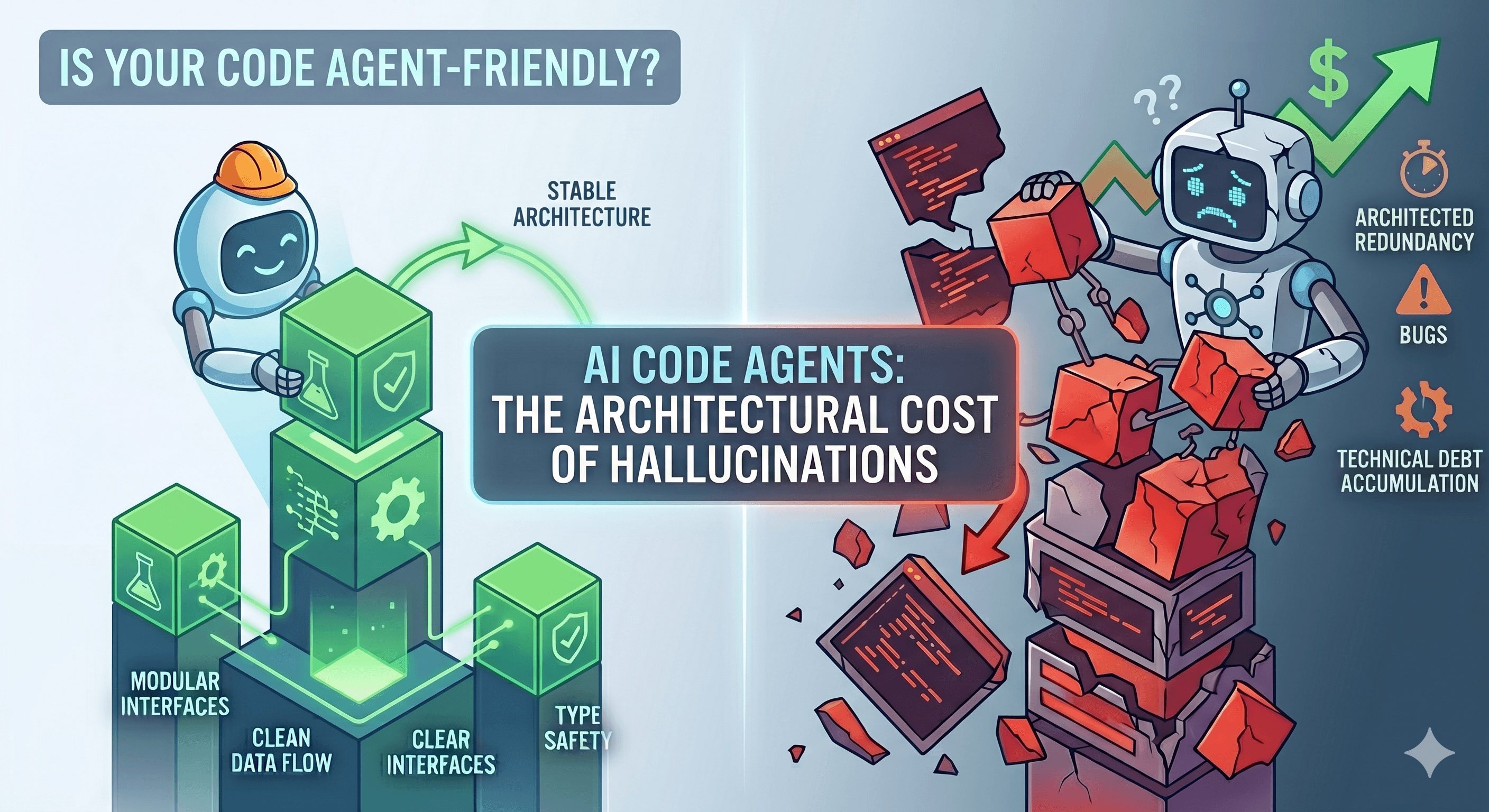
If you treat your AI agent as a "black box" that just spits out PRs, you are accumulating technical debt at an exponential rate. As we discussed in our exploration of Linux AI Engineering, the value of an agent isn't just in the characters it types, but in the environment it interacts with. A professional AI Code Handover requires more than a code review; it requires a systematic verification of the agent's logic and the creation of a "Human-AI Knowledge Bridge."
1) The "Verify-Before-Inherit" Loop
The first rule of a successful AI Code Handover is that the agent must prove its own correctness before a human ever looks at the source. In 2026, "it compiles" is a low bar. For every feature an agent implements, it must be mandated to generate a corresponding suite of integration tests. If an agent cannot explain its own code through failing-then-passing tests, the handover should be rejected.
In our AI Developer Agent Workflow, we emphasize the "Act-and-Verify" cycle. When using the Gemini CLI to refactor a complex Data Access Layer (DALC), the agent should be configured to run your project's dotnet test or npm test suite automatically. This automated safety net ensures that "hallucinated optimizations" are caught in the terminal, not in production. The handover process starts with a green checkmark on the test runner, not a message in the chat.
2) Mapping the "Invisible" Dependencies
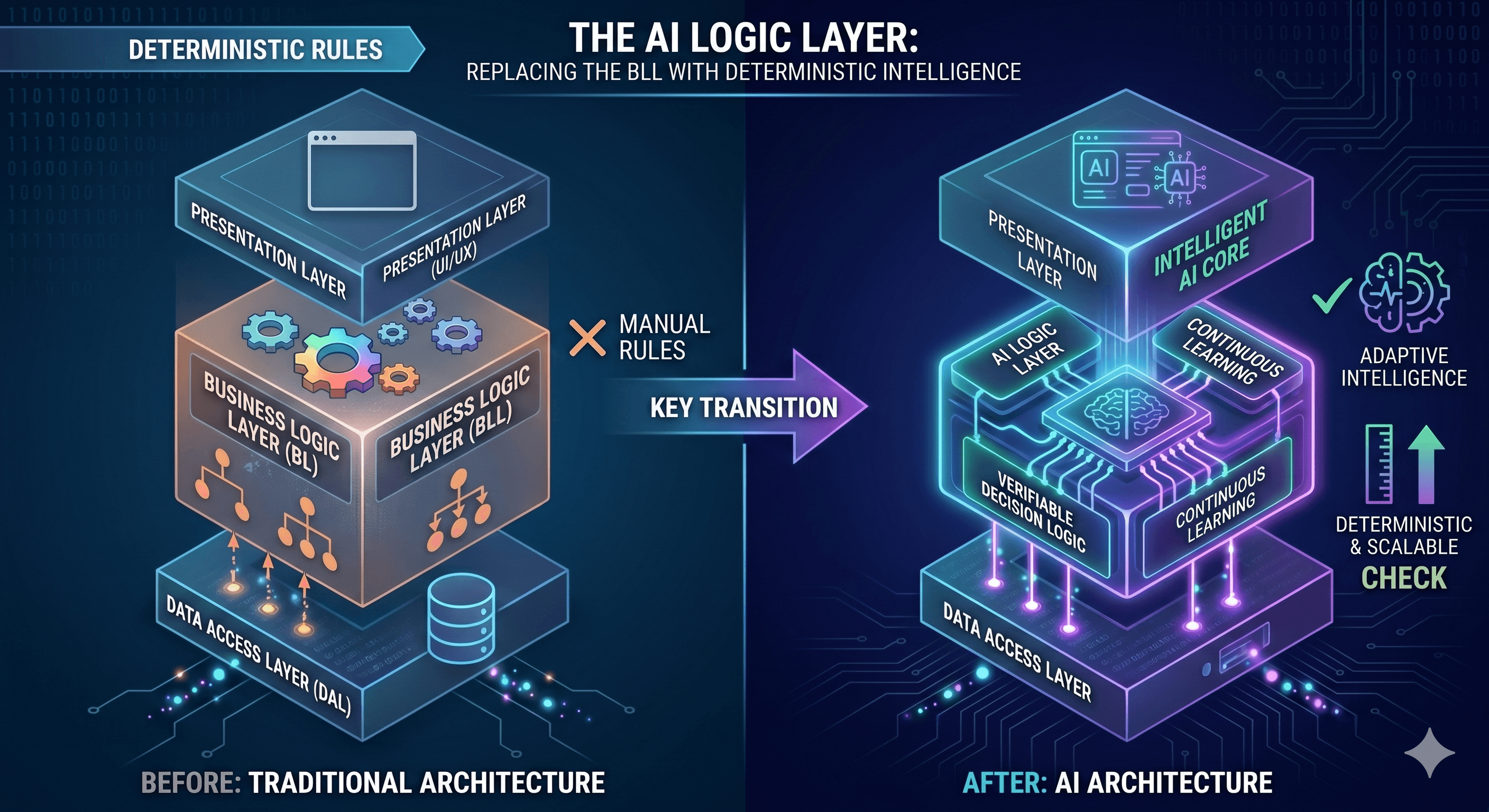
AI agents are incredibly efficient at "surgical" edits, but they often lack a global view of side effects across unrelated modules. A critical part of the AI Code Handover is the architectural audit. When Claude Code modifies a shared utility in your Business Logic Layer (BLC), it might satisfy the immediate requirement while breaking a subtle caching assumption in a different service.
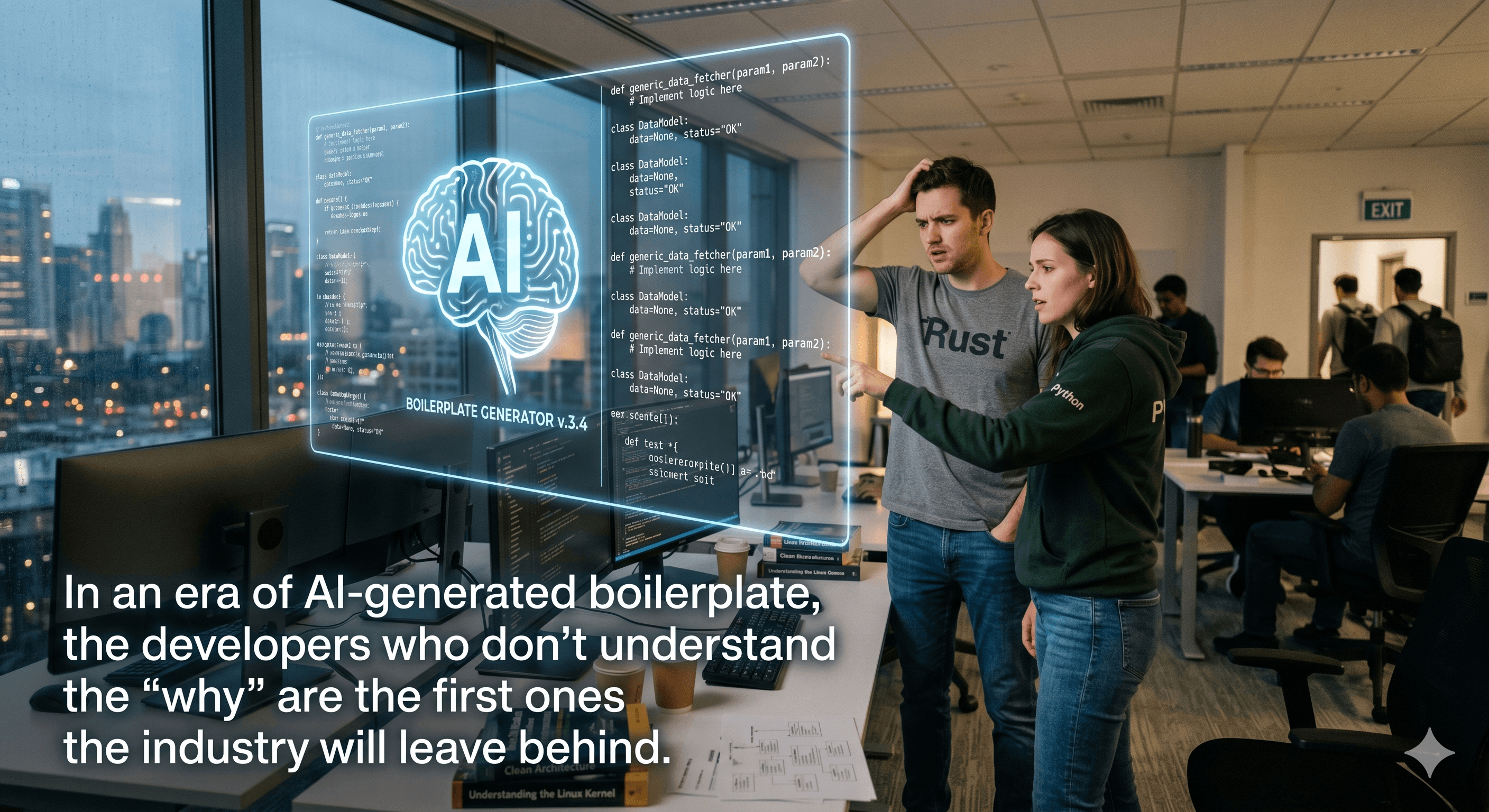
Senior engineers use the handover phase to force the agent to document the "why" behind specific implementation choices. We teach this in our Advanced Node.js Fundamentals course: understanding the Event Loop is vital, but understanding *why* an agent chose a Worker Thread over a simple Promise.all is the difference between a scalable app and a debugging nightmare. A professional handover includes an "Agent-Generated Design Doc" that maps these hidden dependencies.
3) The "Rule of 4": Safety Nets for the AI Handover
To ensure your codebase remains maintainable after an agent departs, implement these four distinct safety strategies during every AI Code Handover:
The Shadow Test Protocol: Require the agent to write "adversarial" tests that specifically target the edge cases of the logic it just created.
Structural Consistency Audit: Use linting tools and "Custom Rules" (like those in
gemini.md) to ensure the agent didn't drift from your project's naming conventions and architectural patterns.The "Explain-to-Junior" Challenge: Ask the agent to summarize the change for a junior developer. If the explanation is overly complex or misses "The Why," the code is likely too clever for its own good.
Contextual Anchoring: Ensure the agent records the specific "Prompt Context" and "File State" at the time of the change, allowing future human maintainers to reconstruct the agent's mental model.
The industry standards for software quality, as outlined by organizations like the IEEE, have always prioritized predictability over speed. In the age of autonomous agents, this priority is more relevant than ever. Speed is a commodity; architectural integrity is a luxury. By mastering the AI Code Handover, you ensure that your "AI-Augmented" team isn't just moving faster, but moving in a direction that is sustainable, safe, and human-understandable. The future belongs to those who can build the safety nets for the machines.
In 2026, the bottleneck in software engineering has shifted. We no longer struggle with "how to write the code"—tools like Claude Code and Gemini CLI can generate thousands of lines of syntactically correct code in seconds. The real challenge is the AI Code Handover: the moment an autonomous agent finishes a task and hands the "keys" back to a human architect. Without a rigorous safety net, this high-speed output quickly transforms into "Synthetic Legacy Code"—functionality that works today but is a mystery to the team tomorrow.
If you treat your AI agent as a "black box" that just spits out PRs, you are accumulating technical debt at an exponential rate. As we discussed in our exploration of Linux AI Engineering, the value of an agent isn't just in the characters it types, but in the environment it interacts with. A professional AI Code Handover requires more than a code review; it requires a systematic verification of the agent's logic and the creation of a "Human-AI Knowledge Bridge."
1) The "Verify-Before-Inherit" Loop
The first rule of a successful AI Code Handover is that the agent must prove its own correctness before a human ever looks at the source. In 2026, "it compiles" is a low bar. For every feature an agent implements, it must be mandated to generate a corresponding suite of integration tests. If an agent cannot explain its own code through failing-then-passing tests, the handover should be rejected.
In our AI Developer Agent Workflow, we emphasize the "Act-and-Verify" cycle. When using the Gemini CLI to refactor a complex Data Access Layer (DALC), the agent should be configured to run your project's dotnet test or npm test suite automatically. This automated safety net ensures that "hallucinated optimizations" are caught in the terminal, not in production. The handover process starts with a green checkmark on the test runner, not a message in the chat.
2) Mapping the "Invisible" Dependencies
AI agents are incredibly efficient at "surgical" edits, but they often lack a global view of side effects across unrelated modules. A critical part of the AI Code Handover is the architectural audit. When Claude Code modifies a shared utility in your Business Logic Layer (BLC), it might satisfy the immediate requirement while breaking a subtle caching assumption in a different service.
Senior engineers use the handover phase to force the agent to document the "why" behind specific implementation choices. We teach this in our Advanced Node.js Fundamentals course: understanding the Event Loop is vital, but understanding *why* an agent chose a Worker Thread over a simple Promise.all is the difference between a scalable app and a debugging nightmare. A professional handover includes an "Agent-Generated Design Doc" that maps these hidden dependencies.
3) The "Rule of 4": Safety Nets for the AI Handover
To ensure your codebase remains maintainable after an agent departs, implement these four distinct safety strategies during every AI Code Handover:
The Shadow Test Protocol: Require the agent to write "adversarial" tests that specifically target the edge cases of the logic it just created.
Structural Consistency Audit: Use linting tools and "Custom Rules" (like those in
gemini.md) to ensure the agent didn't drift from your project's naming conventions and architectural patterns.The "Explain-to-Junior" Challenge: Ask the agent to summarize the change for a junior developer. If the explanation is overly complex or misses "The Why," the code is likely too clever for its own good.
Contextual Anchoring: Ensure the agent records the specific "Prompt Context" and "File State" at the time of the change, allowing future human maintainers to reconstruct the agent's mental model.
The industry standards for software quality, as outlined by organizations like the IEEE, have always prioritized predictability over speed. In the age of autonomous agents, this priority is more relevant than ever. Speed is a commodity; architectural integrity is a luxury. By mastering the AI Code Handover, you ensure that your "AI-Augmented" team isn't just moving faster, but moving in a direction that is sustainable, safe, and human-understandable. The future belongs to those who can build the safety nets for the machines.