Backend Engineering / SQL
SQL Performance in Plain English: Stop Guessing and Start Indexing
Developers often treat the database as a black box. Learn how to read an Execution Plan and identify the 3 most common 'Index Killers' in production code.
Written by

Codehouse Author
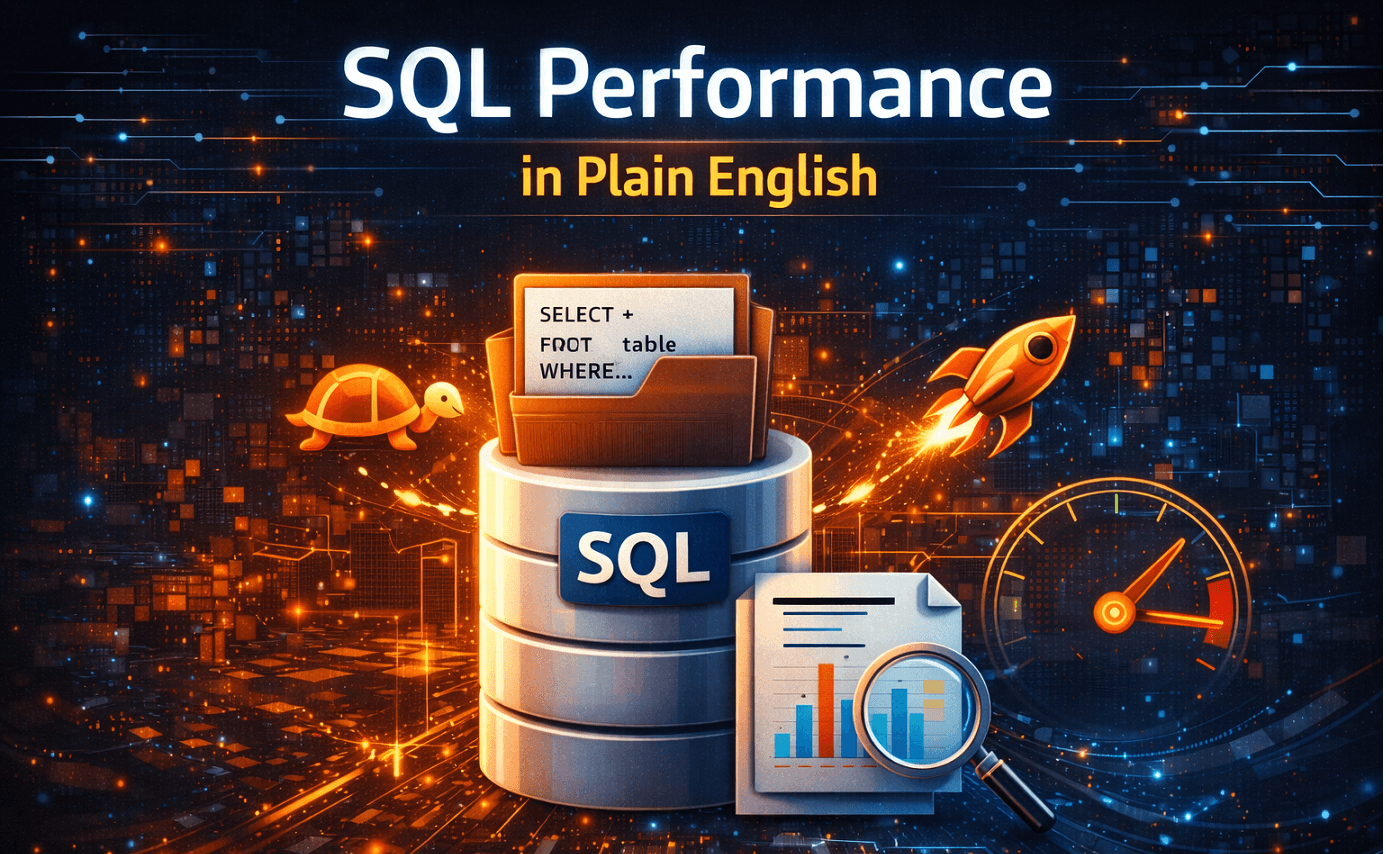
Most database problems aren't caused by "too much data." They are caused by "too much searching." This often happens when developers focus solely on Full-Stack Roadmaps but skip the deep-dive database internals.
Before you add an index, ask the database how it’s currently finding the data. Every major engine, like PostgreSQL, provides tools to look under the hood.
1) The Execution Plan: The Source of Truth
Use commands like EXPLAIN to see if your database is performing a costly "Table Scan." This is a fundamental step in our Production API Checklist.
Index Seek: The database jumps directly to the data (Fast).
Table Scan: The database reads every single row (Slow).
2) Common Index Killers
Even with an index, your code might be forcing the database to ignore it. Avoid these patterns:
Functions on Columns: Using
WHERE YEAR(date)prevents the index from being used.Implicit Conversions: Comparing a string to a numeric column forces a full scan.
Wildcard Starts: Searching for
LIKE '%value'makes the index index useless for seeking.
Most database problems aren't caused by "too much data." They are caused by "too much searching." This often happens when developers focus solely on Full-Stack Roadmaps but skip the deep-dive database internals.
Before you add an index, ask the database how it’s currently finding the data. Every major engine, like PostgreSQL, provides tools to look under the hood.
1) The Execution Plan: The Source of Truth
Use commands like EXPLAIN to see if your database is performing a costly "Table Scan." This is a fundamental step in our Production API Checklist.
Index Seek: The database jumps directly to the data (Fast).
Table Scan: The database reads every single row (Slow).
2) Common Index Killers
Even with an index, your code might be forcing the database to ignore it. Avoid these patterns:
Functions on Columns: Using
WHERE YEAR(date)prevents the index from being used.Implicit Conversions: Comparing a string to a numeric column forces a full scan.
Wildcard Starts: Searching for
LIKE '%value'makes the index index useless for seeking.