AI Strategy / Software Engineering
The "Ship of Theseus" Advantage: Why AI is 10x More Valuable in Your Current Apps Than in Your Next One
Stop treating AI as a 'new app' generator. Learn why using an AI Code Assistant in existing 'Brownfield' applications provides 10x more ROI through contextual archaeology and surgical modernization.
Written by

Codehouse Author
The "Ship of Theseus" Advantage: Why AI is 10x More Valuable in Your Current Apps Than in Your Next One
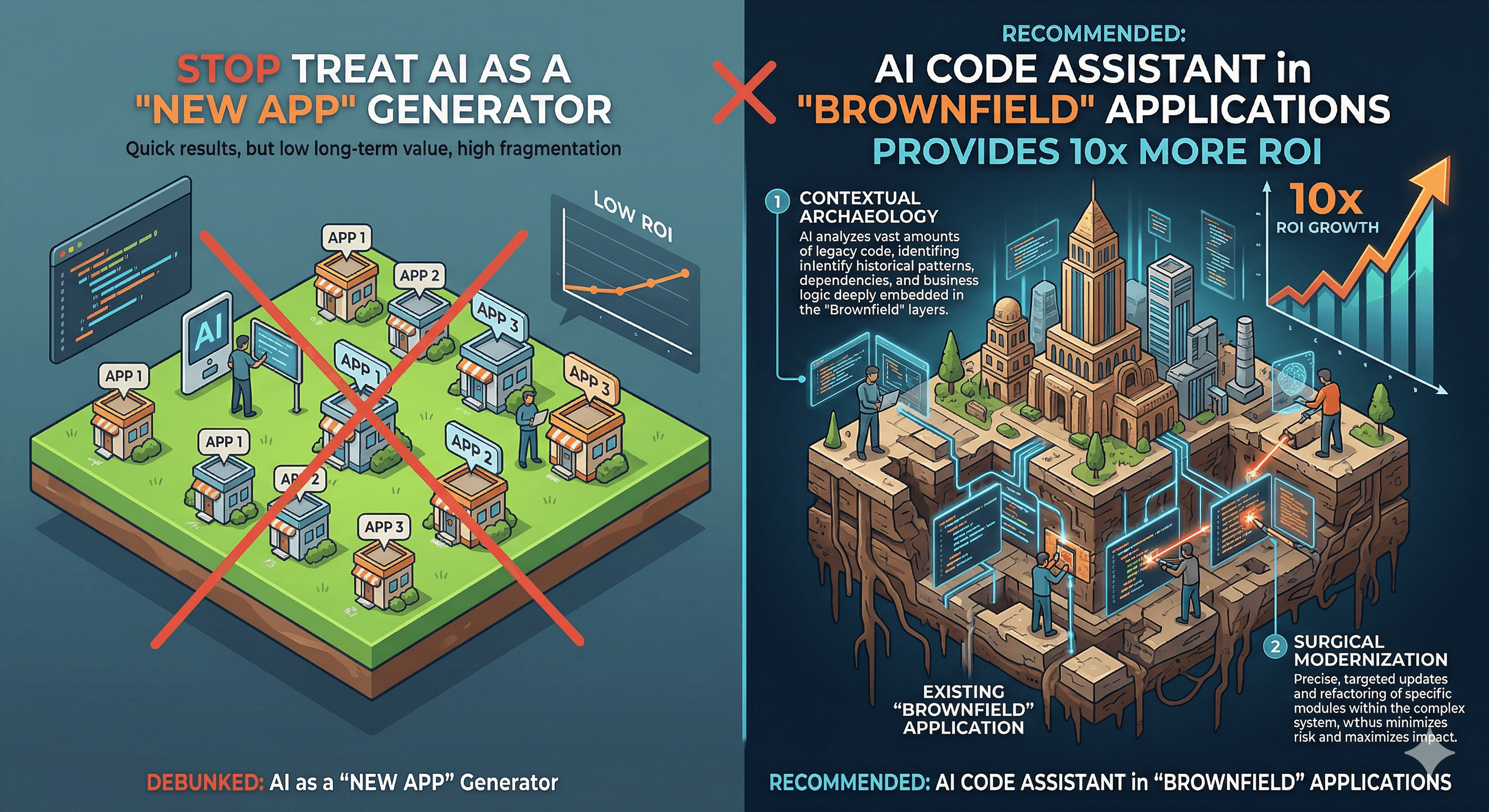
If you look at the marketing for most AI tools today, you’ll see demos of "building a todo app in 30 seconds." While flashy, this Greenfield obsession is a distraction. For a professional engineer, the real value of an AI Code Assistant Existing Apps strategy isn't in starting from zero—it’s in the "archaeology" and modernization of the systems that actually power the business today.
In our Weekend Migration Case Study, we demonstrated that the most profitable use of AI is not replacing your codebase, but refining it. When you use an AI Code Assistant Existing Apps, you aren't just a coder; you are an architect performing a "Ship of Theseus" refactor—replacing every part of the ship while it’s still at sea, without the business ever feeling the transition.
1) The Greenfield Trap vs. The Brownfield Goldmine
The "Big Bang Rewrite" is the most expensive mistake a senior developer can make. It ignores years of edge-case fixes, security patches, and "tribal knowledge" baked into the current code. An AI Code Assistant Existing Apps allows you to bypass this trap by providing instant clarity on code you didn't write.
Contextual Archeology: Instead of spending three days reading an undocumented 2,000-line stored procedure, an AI agent can map the data flow and explain the "why" behind obscure logic in seconds.
Identifying "Dead Code" with Precision: AI can analyze your entire solution to find orphaned methods and unused dependencies that standard linters might miss, reducing the cognitive load of the system.
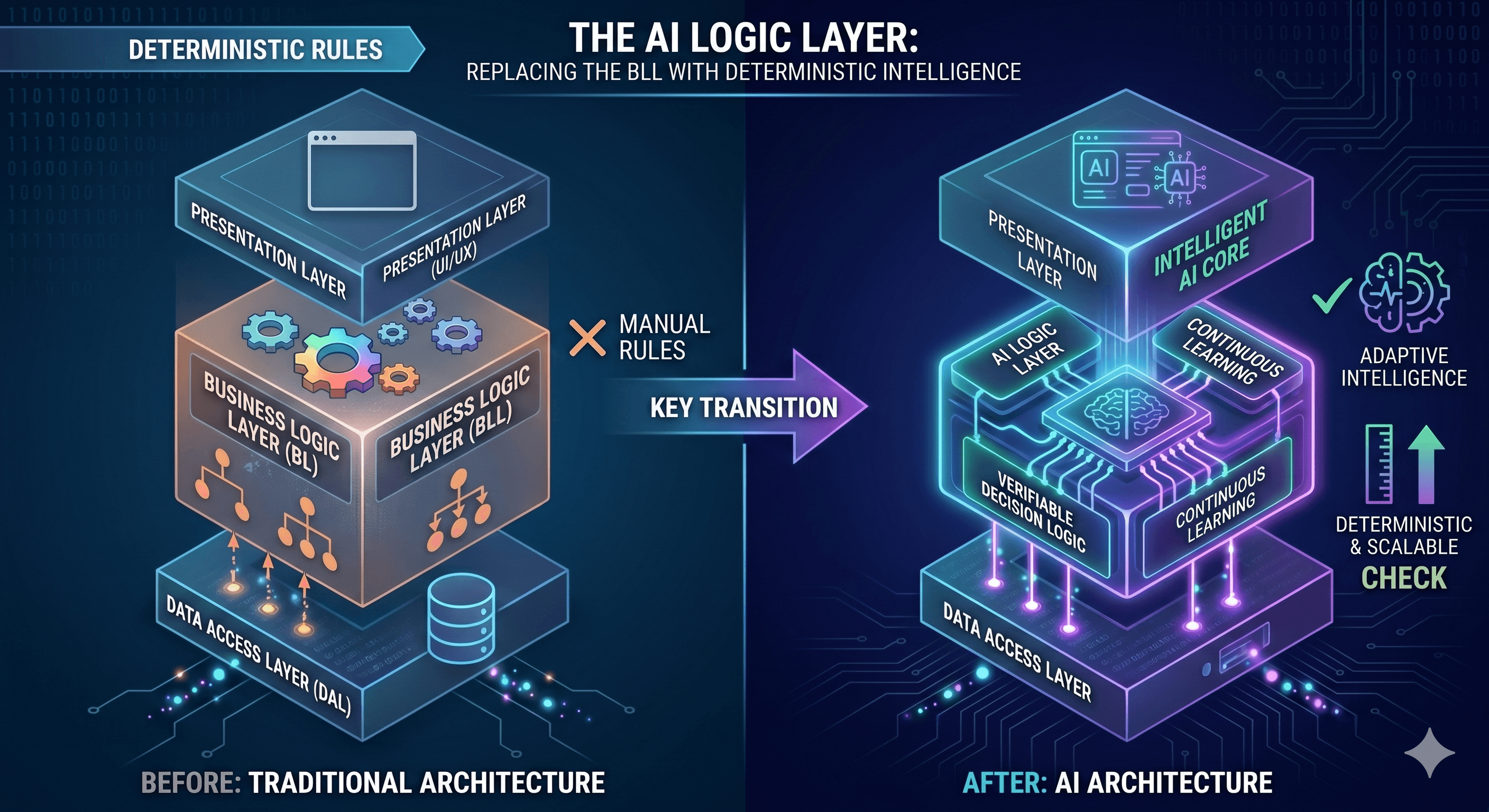
Bridging the Tech Gap: We frequently use AI to bridge the gap between legacy .NET 4.8 BLCs (Business Logic Layers) and modern .NET 8 implementations. The AI helps translate the *intent* of the code while leveraging modern framework features like `IAsyncEnumerable` or high-performance `Span` patterns.
2) Surgical Modernization: The Senior Engineer's Secret
Using an AI Code Assistant Existing Apps turns modernization from a terrifying risk into a controlled experiment. Instead of a "rewrite," we perform "Surgical Modernization." You feed the AI a specific class, its dependencies, and the target architecture. The AI then proposes a refactor that maintains the original behavioral contract but improves performance and maintainability.
This approach is essential for maintaining a Production-Grade API. By modernizing incrementally, you keep the application "shippable" every single day. You aren't waiting for a six-month "V2" launch that might never happen; you are providing value to the business every week by making the existing system faster, safer, and easier to work with.
3) The "Safety Net" Strategy
The biggest hurdle to working on current applications is the fear of breaking things. This is where an AI Code Assistant Existing Apps becomes your ultimate safety net. Before touching a single line of logic, use the AI to generate "Characterization Tests." These are tests that capture the current, messy reality of how the code works today.
Once you have a green test suite, you can refactor with confidence. This "Test-First Resurrection" strategy allows you to take a "legacy" app and turn it into a modern, testable, and high-performance asset without the risk of a full rewrite.
Conclusion: Stop Building Toys, Start Mastering Giants
In 2026, the market is flooded with people who can build "new apps." The high-value engineers are those who can walk into a 15-year-old monolith and use an AI Code Assistant Existing Apps to make it as fast and maintainable as a fresh project. This is the core of what we teach in our Linux Mastery: Full Course—understanding the underlying infrastructure and tools so you can orchestrate AI to solve real-world, complex problems.
The future belongs to those who can bridge the past and the future. Stop looking for the "Next Big Thing" and start using AI to unlock the massive hidden value in the "Current Big Thing" your company already owns.
The "Ship of Theseus" Advantage: Why AI is 10x More Valuable in Your Current Apps Than in Your Next One
If you look at the marketing for most AI tools today, you’ll see demos of "building a todo app in 30 seconds." While flashy, this Greenfield obsession is a distraction. For a professional engineer, the real value of an AI Code Assistant Existing Apps strategy isn't in starting from zero—it’s in the "archaeology" and modernization of the systems that actually power the business today.
In our Weekend Migration Case Study, we demonstrated that the most profitable use of AI is not replacing your codebase, but refining it. When you use an AI Code Assistant Existing Apps, you aren't just a coder; you are an architect performing a "Ship of Theseus" refactor—replacing every part of the ship while it’s still at sea, without the business ever feeling the transition.
1) The Greenfield Trap vs. The Brownfield Goldmine
The "Big Bang Rewrite" is the most expensive mistake a senior developer can make. It ignores years of edge-case fixes, security patches, and "tribal knowledge" baked into the current code. An AI Code Assistant Existing Apps allows you to bypass this trap by providing instant clarity on code you didn't write.
Contextual Archeology: Instead of spending three days reading an undocumented 2,000-line stored procedure, an AI agent can map the data flow and explain the "why" behind obscure logic in seconds.
Identifying "Dead Code" with Precision: AI can analyze your entire solution to find orphaned methods and unused dependencies that standard linters might miss, reducing the cognitive load of the system.
Bridging the Tech Gap: We frequently use AI to bridge the gap between legacy .NET 4.8 BLCs (Business Logic Layers) and modern .NET 8 implementations. The AI helps translate the *intent* of the code while leveraging modern framework features like `IAsyncEnumerable` or high-performance `Span` patterns.
2) Surgical Modernization: The Senior Engineer's Secret
Using an AI Code Assistant Existing Apps turns modernization from a terrifying risk into a controlled experiment. Instead of a "rewrite," we perform "Surgical Modernization." You feed the AI a specific class, its dependencies, and the target architecture. The AI then proposes a refactor that maintains the original behavioral contract but improves performance and maintainability.
This approach is essential for maintaining a Production-Grade API. By modernizing incrementally, you keep the application "shippable" every single day. You aren't waiting for a six-month "V2" launch that might never happen; you are providing value to the business every week by making the existing system faster, safer, and easier to work with.
3) The "Safety Net" Strategy
The biggest hurdle to working on current applications is the fear of breaking things. This is where an AI Code Assistant Existing Apps becomes your ultimate safety net. Before touching a single line of logic, use the AI to generate "Characterization Tests." These are tests that capture the current, messy reality of how the code works today.
Once you have a green test suite, you can refactor with confidence. This "Test-First Resurrection" strategy allows you to take a "legacy" app and turn it into a modern, testable, and high-performance asset without the risk of a full rewrite.
Conclusion: Stop Building Toys, Start Mastering Giants
In 2026, the market is flooded with people who can build "new apps." The high-value engineers are those who can walk into a 15-year-old monolith and use an AI Code Assistant Existing Apps to make it as fast and maintainable as a fresh project. This is the core of what we teach in our Linux Mastery: Full Course—understanding the underlying infrastructure and tools so you can orchestrate AI to solve real-world, complex problems.
The future belongs to those who can bridge the past and the future. Stop looking for the "Next Big Thing" and start using AI to unlock the massive hidden value in the "Current Big Thing" your company already owns.