AI & Engineering / Workflow
From 'Prompt Engineer' to 'Agent Orchestrator': How CLI Agents Changed My Development Lifecycle
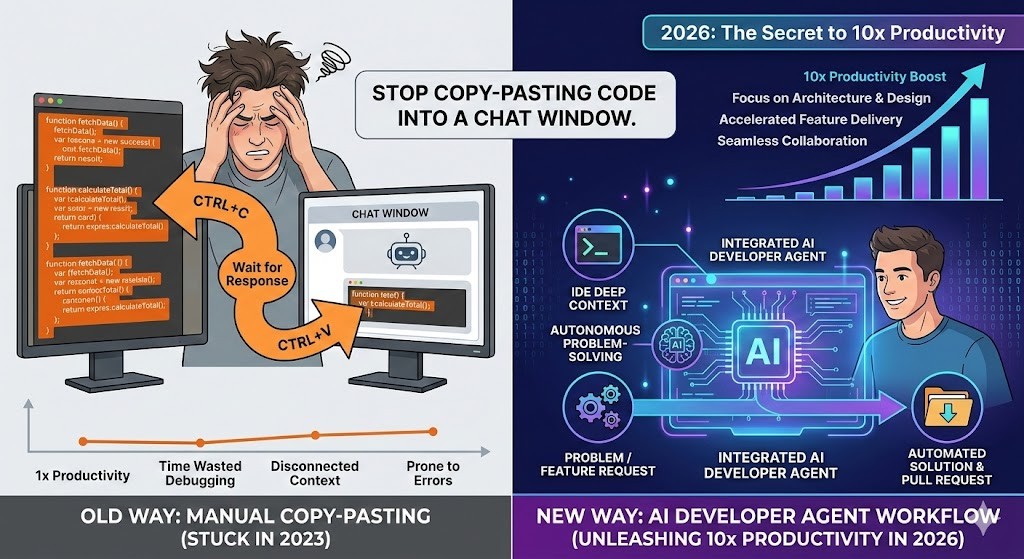
Stop copy-pasting code into a chat window. Learn why the shift to an 'AI Developer Agent Workflow' is the secret to 10x productivity in 2026.
Written by
Codehouse Author
If 2023 was the year of the Chatbot and 2024 was the year of Copilots, then 2026 is officially the year of the Agent Orchestrator. For the modern senior engineer, the novelty of "asking an AI to write a function" has worn off. We’ve realized that the bottleneck isn't the code generation itself—it's the context management, the file switching, and the manual validation that follows. This is where the AI Developer Agent Workflow becomes a game-changer.
Building on our previous discussion about AI in Legacy Codebases, we are seeing a fundamental shift in how professionals interact with Large Language Models. We are moving away from being "Prompt Engineers" who tweak words to get better snippets, and toward being "Orchestrators" who direct autonomous agents to perform high-level engineering tasks directly within our file systems.
1) The Limitations of the "Chat Box" Interface
The classic web-based AI chat is a "disconnected" experience. To get a meaningful result, you have to manually copy-paste code, explain your architecture, and hope the AI remembers your naming conventions. This "Context Tax" is what keeps many developers stuck in a junior-level AI Developer Agent Workflow.
Context Blindness: A web chat doesn't know about your
BLC_Initial.csor your database schema unless you tell it.Manual Execution: After the AI gives you a solution, you still have to create the files, run the tests, and fix the imports.
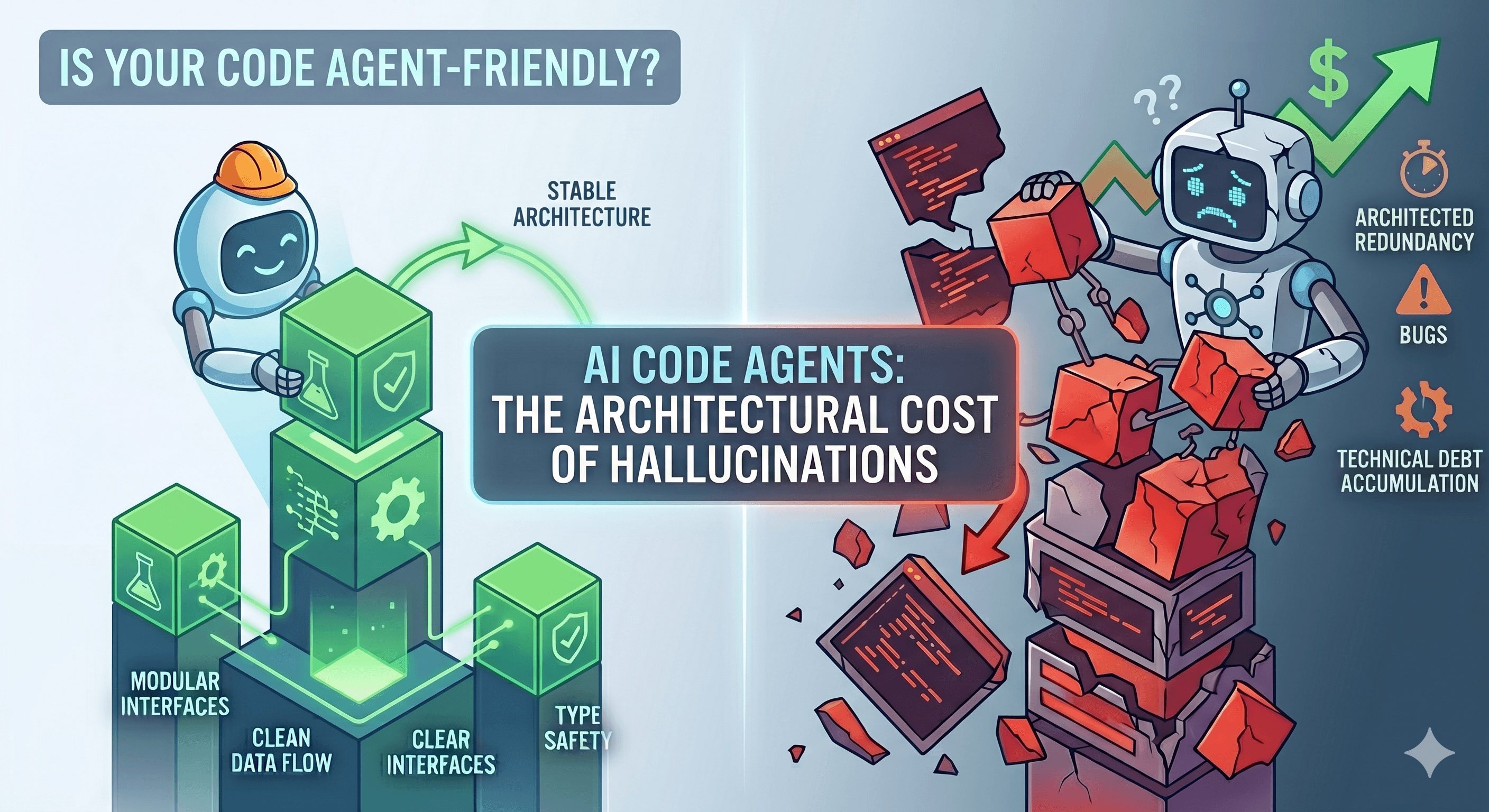
Hallucination Risks: Without access to the real compiler or file system, the AI is guessing. It can't "verify" that the code it just wrote actually runs in your specific environment.
2) The Rise of the CLI Agent Orchestrator
The "Senior" approach in 2026 involves using CLI-based agents—like the specialized tools we use at Codehouse—that "live" in your terminal. These aren't just wrappers for an LLM; they are sophisticated engines capable of searching your codebase, reading multiple files in parallel, and executing shell commands. This creates a highly efficient AI Developer Agent Workflow where the AI acts as a high-speed junior pair-programmer under your direct supervision.
As we highlighted in our Full-Stack Roadmap for 2026, the ability to orchestrate these agents is now a core competency. Instead of writing "Fix this bug," a senior engineer issues a directive: "Investigate why the transaction fails in the DALC when the connection string is null, propose a fix following our Clean Architecture patterns, and run the unit tests to verify." The agent then performs the research, applies the surgical edit, and reports back with the results.
3) Real-World Application: "Codebase Archaeology"
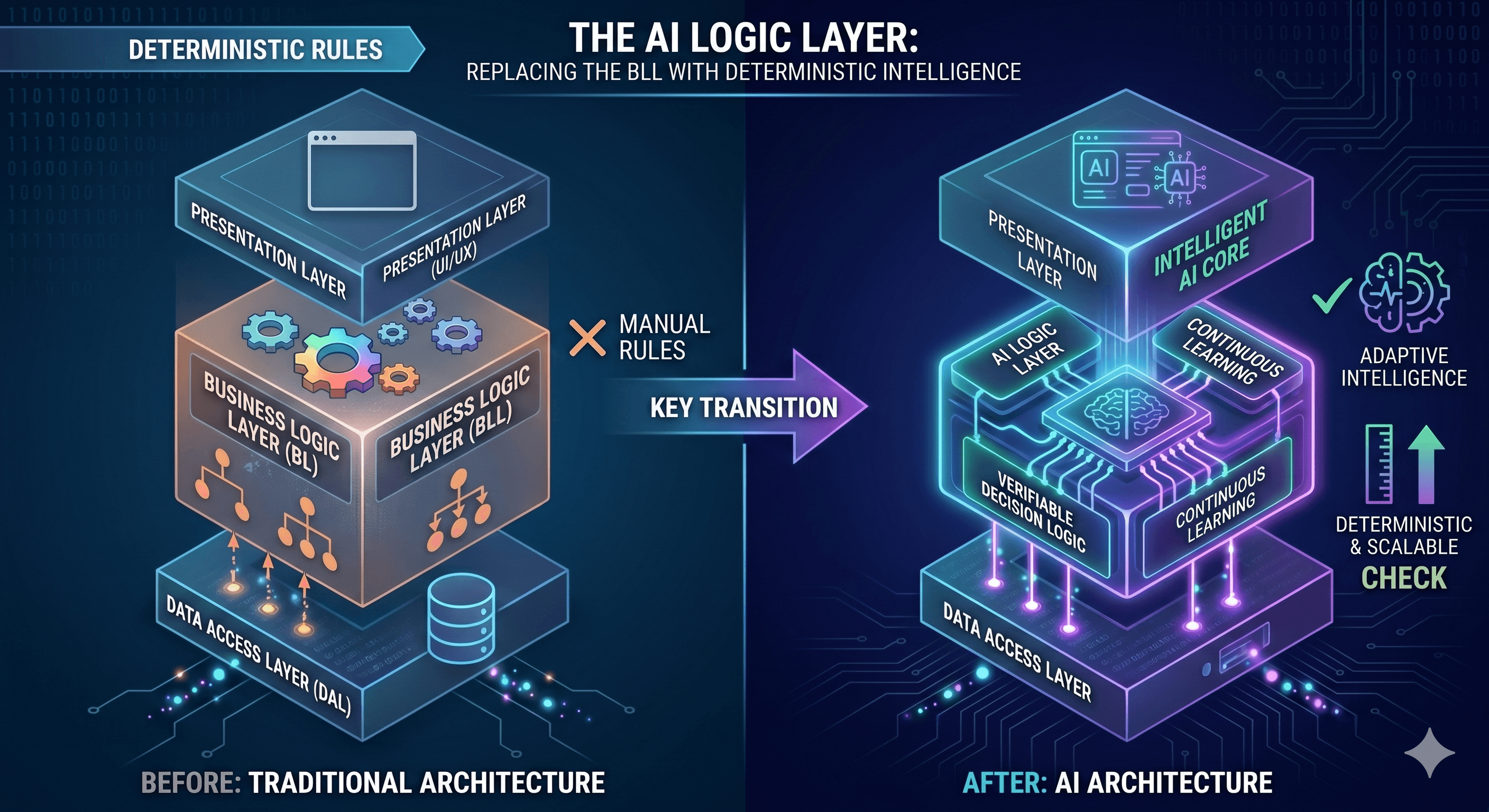
The true power of an AI Developer Agent Workflow is revealed during complex refactoring. Imagine modernizing a legacy .NET 4.8 project to .NET 8. In the old world, this would take weeks of manual effort. In the agentic world, you can task your orchestrator with mapping out every dependency in your BLC (Business Logic Layer) and identifying which parts can be replaced by modern .NET 8 Performance Patterns like Span<T> or FrozenDictionary.
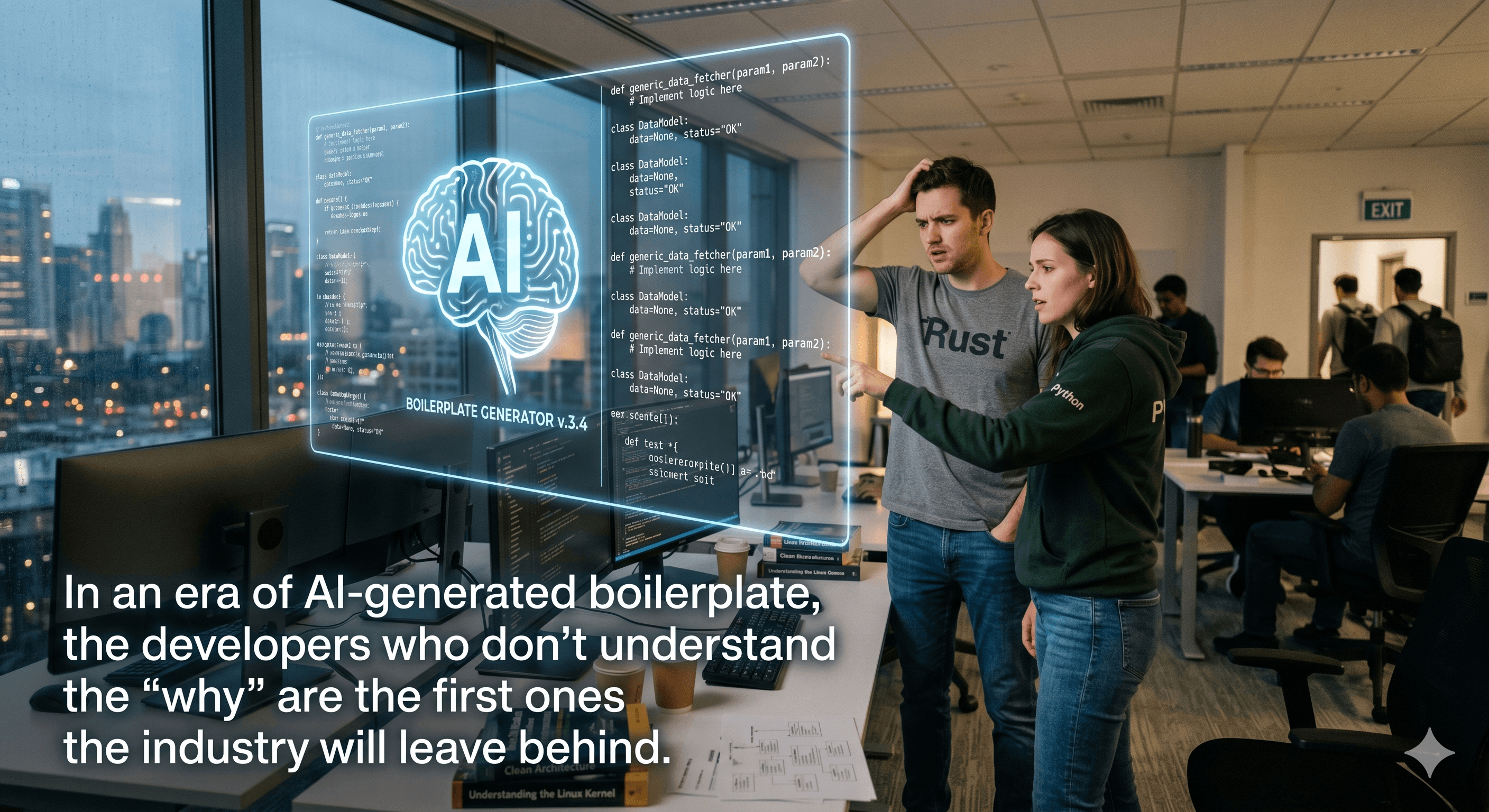
By utilizing tools like GitHub Copilot Extensions or custom-built CLI agents, you can automate the "boring" parts of engineering—scaffolding, boilerplate, and dependency updates—while you focus on high-level architecture and security. This is the "Orchestrator" mindset: you aren't just writing code; you are managing a system of agents that execute your technical vision with precision.
In conclusion, the era of the "Prompt Engineer" is over. To stay relevant in 2026, you must master the AI Developer Agent Workflow. You must learn to trust agents with the "Act" and "Validate" phases of development, while you remain the master of the "Strategy" and "Review" phases. Stop talking to your AI and start directing it. The future of engineering isn't just about what you can write—it's about what you can orchestrate.
If 2023 was the year of the Chatbot and 2024 was the year of Copilots, then 2026 is officially the year of the Agent Orchestrator. For the modern senior engineer, the novelty of "asking an AI to write a function" has worn off. We’ve realized that the bottleneck isn't the code generation itself—it's the context management, the file switching, and the manual validation that follows. This is where the AI Developer Agent Workflow becomes a game-changer.
Building on our previous discussion about AI in Legacy Codebases, we are seeing a fundamental shift in how professionals interact with Large Language Models. We are moving away from being "Prompt Engineers" who tweak words to get better snippets, and toward being "Orchestrators" who direct autonomous agents to perform high-level engineering tasks directly within our file systems.
1) The Limitations of the "Chat Box" Interface
The classic web-based AI chat is a "disconnected" experience. To get a meaningful result, you have to manually copy-paste code, explain your architecture, and hope the AI remembers your naming conventions. This "Context Tax" is what keeps many developers stuck in a junior-level AI Developer Agent Workflow.
Context Blindness: A web chat doesn't know about your
BLC_Initial.csor your database schema unless you tell it.Manual Execution: After the AI gives you a solution, you still have to create the files, run the tests, and fix the imports.
Hallucination Risks: Without access to the real compiler or file system, the AI is guessing. It can't "verify" that the code it just wrote actually runs in your specific environment.
2) The Rise of the CLI Agent Orchestrator
The "Senior" approach in 2026 involves using CLI-based agents—like the specialized tools we use at Codehouse—that "live" in your terminal. These aren't just wrappers for an LLM; they are sophisticated engines capable of searching your codebase, reading multiple files in parallel, and executing shell commands. This creates a highly efficient AI Developer Agent Workflow where the AI acts as a high-speed junior pair-programmer under your direct supervision.
As we highlighted in our Full-Stack Roadmap for 2026, the ability to orchestrate these agents is now a core competency. Instead of writing "Fix this bug," a senior engineer issues a directive: "Investigate why the transaction fails in the DALC when the connection string is null, propose a fix following our Clean Architecture patterns, and run the unit tests to verify." The agent then performs the research, applies the surgical edit, and reports back with the results.
3) Real-World Application: "Codebase Archaeology"
The true power of an AI Developer Agent Workflow is revealed during complex refactoring. Imagine modernizing a legacy .NET 4.8 project to .NET 8. In the old world, this would take weeks of manual effort. In the agentic world, you can task your orchestrator with mapping out every dependency in your BLC (Business Logic Layer) and identifying which parts can be replaced by modern .NET 8 Performance Patterns like Span<T> or FrozenDictionary.
By utilizing tools like GitHub Copilot Extensions or custom-built CLI agents, you can automate the "boring" parts of engineering—scaffolding, boilerplate, and dependency updates—while you focus on high-level architecture and security. This is the "Orchestrator" mindset: you aren't just writing code; you are managing a system of agents that execute your technical vision with precision.
In conclusion, the era of the "Prompt Engineer" is over. To stay relevant in 2026, you must master the AI Developer Agent Workflow. You must learn to trust agents with the "Act" and "Validate" phases of development, while you remain the master of the "Strategy" and "Review" phases. Stop talking to your AI and start directing it. The future of engineering isn't just about what you can write—it's about what you can orchestrate.